Aquafacial
The Aquafacial is a gentle, non-invasive treatment designed to achieve a clear, even complexion, and is one of the most popular methods of its kind.
For many people, the desire for clear, radiant and even-toned skin is a key priority. In the age of social media and the quest for a healthy „glow“, gentle, non-invasive treatments are becoming increasingly popular. One of the most popular and effective methods in this field is the Aquafacial.
In our glossary entry, we explain everything you need to know about this modern form of skin cleansing and care: from how it works and its benefits to the key points you should bear in mind to ensure a safe and successful treatment.
Table of Contents
Important note
This article is for information purposes only and is not a substitute for a medical diagnosis or advice. If you are unsure, or if you require a personalised treatment plan, it is essential that you consult a qualified specialist.
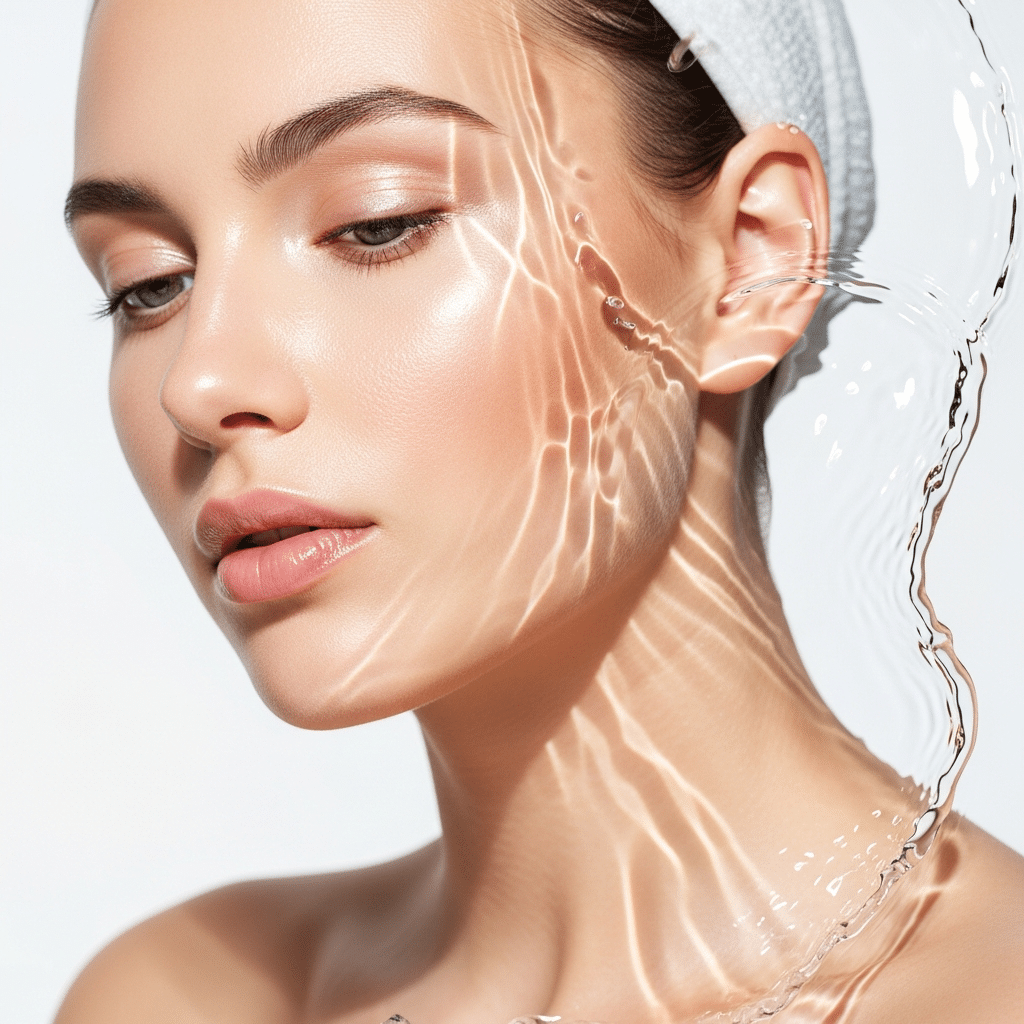
Definition: What is an Aquafacial?
A Aquafacial, also known as hydradermabrasion, is a non-invasive, intensive facial treatment that combines several skincare steps in a single procedure: deep cleansing, fruit acid exfoliation, pore cleansing and hydration of the skin with nutrient-rich serums.
Using a specialised device and a vacuum attachment, impurities are gently removed from the skin whilst it is simultaneously infused with moisture and active ingredients such as hyaluronic acid and antioxidants.
How does the Aquafacial treatment work? The 4-stage process
At the heart of the treatment is a device that uses various attachments and solutions. The procedure is usually painless for the patient and is often described as pleasant.
- Stage 1: Skin cleansing & exfoliation First, the surface of the skin is gently exfoliated. Dead skin cells are softened and removed using a mild solution. Depending on the device and skin condition, mild solutions containing AHAs and/or BHAs are used; the composition and concentration vary depending on the supplier. This reveals a fresher, healthier-looking layer of skin.
- Phase 2: Gentle acid peel A gentle chemical exfoliant is then applied. This solution helps to soften build-up in the pores and prepares the skin perfectly for deep cleansing without causing significant irritation.
- Phase 3: Deep cleansing This step involves the use of vacuum technology. A special spiral-shaped attachment is used to „suction“ the softened impurities, sebum build-up and blackheads painlessly from the pores.
- Phase 4: Hydration & Nutrient Supply (Dermal Infusion) Finally, highly effective, moisturising serums are applied to the now cleansed and particularly receptive skin. These serums typically contain hyaluronic acid, vitamins and antioxidants, which intensively nourish and protect the skin, giving it an instant „glow“.
The main benefits and effects for the skin
When carried out by a professional, an Aqua Facial can visibly improve the appearance of the skin.
Advantages (Pros)
- Results you can see straight away: Immediately after the treatment, the skin looks fresher, more radiant and smoother.
- Intensive moisturising: Ideal for dry and dehydrated skin thanks to the addition of hyaluronic acid.
- Deep pore cleansing: Effective removal of blackheads and sebum build-up.
- Suitable for many skin types: The intensity and the serums used can be tailored to the individual.
- No downtime: Normally, there is no significant redness, so you can go about your business straight away.
- Pain-free treatment: The vacuum method is considerably gentler than manual cleaning.
Possible disadvantages (cons)
- Preliminary results: Regular treatments are necessary to achieve long-lasting results.
- Costs: The treatment is more expensive than a standard beauty treatment.
- Not suitable for everyone: Treatment is not recommended in cases of acute skin conditions or certain allergies.
- Potential risks: The treatment is generally well tolerated; however, as with all procedures involving medical equipment, side effects are possible.
Who is an Aqua Facial suitable for? Skin types & areas of application
The Aqua Facial is versatile and is generally suitable for most skin types. It achieves particularly good results for:
- Dull, tired and stressed skin
- Dry, dehydrated skin
- Clogged or enlarged pores
- Mild acne and blemished skin (not for severely inflamed acne)
- Oily and combination skin
- The first fine lines and wrinkles
- In some cases, also for superficial hyperpigmentation and sun damage
Aquafacial vs. HydraFacial®: What is the difference?
The two terms are often used interchangeably, but this is not entirely correct.
- HydraFacial® is the original manufacturer’s registered trade name for this type of hydradermabrasion treatment. The devices and serums are subject to strict quality controls.
- Aquafacial is the general, descriptive term for treatments that use equipment from other manufacturers operating on the same principle (water, vacuum, serums).
Although the basic principle is the same, the quality of the equipment, the concentration of active ingredients in the serums and the training of the practitioner may vary.
Aquafacial compared: how it differs from microdermabrasion
| Characteristic | Aquafacial (Hydradermabrasion) | Traditional microdermabrasion |
|---|---|---|
| Principle | Wet abrasion with vacuum and active ingredient delivery | Dry abrasion using crystals or diamond attachments |
| Main focus | Cleansing, exfoliation and intensive hydration | Purely mechanical exfoliation/removal of the skin |
| Skin sensation | Gentle, cooling, refreshing | More like intensive sandblasting; may cause irritation |
| Ideal for | Many skin types, particularly skin lacking in moisture | More suitable for rough, calloused skin, scars and wrinkles |
| Downtime | Usually none | Slight redness may occur for 1–2 days |
Risks and possible side effects
Although the Aquafacial is regarded as a very safe and gentle treatment, it does interfere with the skin barrier.
Important safety instructions
Possible side effects: Mild redness or temporary skin sensitivity immediately after the treatment is normal and usually subsides within a few hours.
Contraindications: In the following cases, you should none Aquafacial treatments can be carried out:
- Active skin infections (e.g. herpes) in the treatment area
- Severe inflammatory acne or open wounds
- Fresh scars or sunburn
- Known allergies to the ingredients used (e.g. salicylic acid)
- Taking certain medicines (e.g. isotretinoin)
- Pregnancy and breastfeeding (as a precaution)
A reputable provider will always carry out a thorough skin analysis and hold an informative consultation before the first treatment.
More serious risks if used incorrectly
Although rare, more serious complications can arise if the procedure is carried out incorrectly, if hygiene standards are not maintained, or if the skin type is misjudged:
- Infections: Bacterial or fungal Infections due to inadequately disinfected attachments.
- Skin damage: Minor bruises (Haematomas), burst capillaries or pigmentation changes caused by excessive vacuum pressure.
- Severe allergic reactions: Severe skin reactions to the acids or serums used.
- Exacerbation of skin conditions: A significant worsening of rosacea or cystic acne if used incorrectly.
What should you look out for when choosing a provider? Tips for safe treatment
The quality and safety of the treatment depend crucially on the provider.
- Qualification: Choose certified beauticians, dermatologists or clinics with a proven track record.
- Consultation: A detailed preliminary consultation to discuss your goals, the condition of your skin and any possible contraindications is essential.
- Hygiene: Ensure that the treatment rooms are spotlessly clean and that sterile attachments are used.
- Product transparency: Ask about the equipment used and the ingredients in the serums. A professional provider will be happy to provide this information.
- Realistic expectations: Be wary of unrealistic claims of a cure. An Aquafacial improves the appearance of the skin, but cannot cure deep wrinkles or serious skin conditions.
Anyone who wants to be on the safe side when it comes to beauty treatments can take out insurance for the planned procedure with a Consequential Costs Insurance to provide financial protection against potential follow-up treatment.
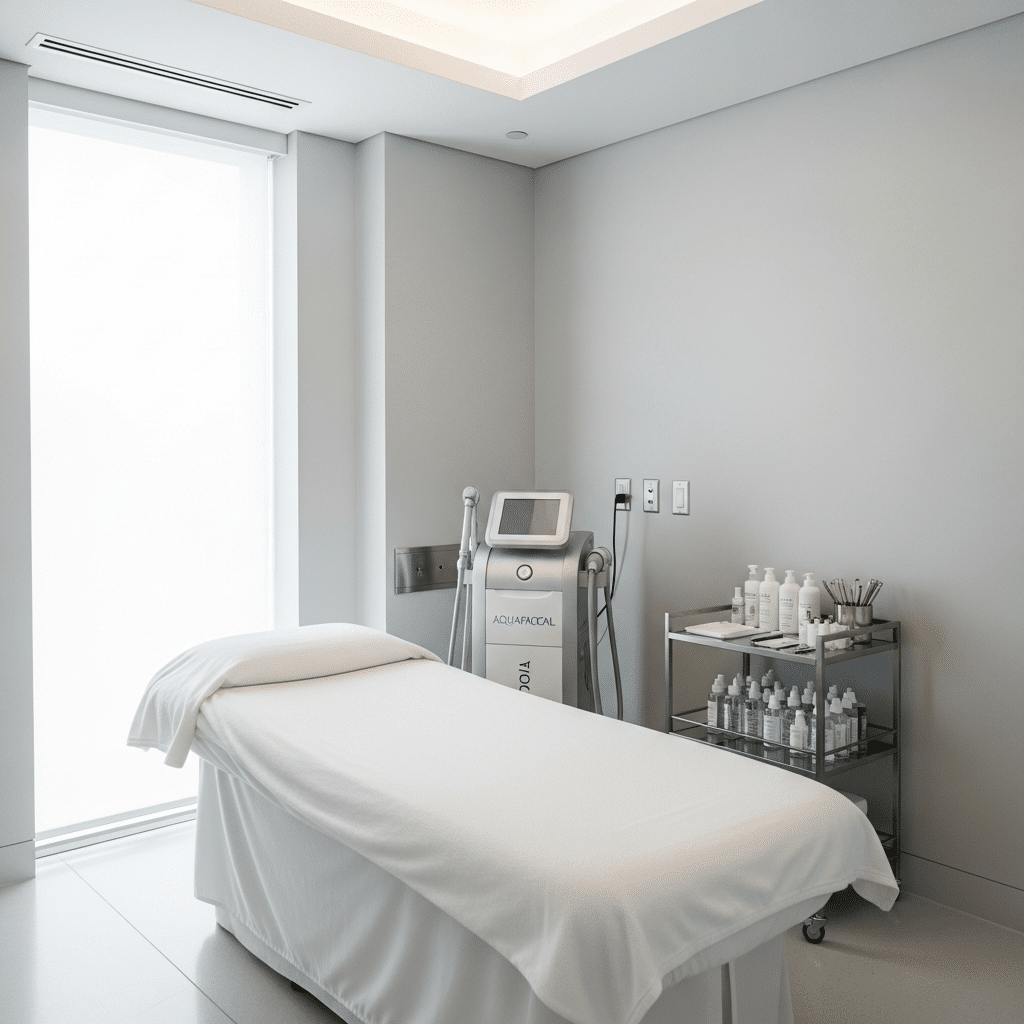
Frequently Asked Questions (FAQ) about the Aquafacial
No, the treatment is painless. Most people find the gentle suction of the vacuum and the cool liquids pleasant and refreshing.
A single session usually lasts between 45 and 60 minutes. To achieve the best possible, long-lasting results, 3–5 treatments at intervals of approximately 4 weeks are often recommended. A single treatment every 1–2 months is then sufficient to maintain the results.
The cost of an Aquafacial varies depending on the region, salon and scope of the treatment. On average, prices in Germany range from €90 to €180 per session.
It is recommended that you give your skin a break for the rest of the day and avoid wearing make-up, so that your pores remain unclogged and the serums can work to their full potential. You can usually apply make-up without any problems the following day.
Immediately after the treatment, you should avoid intense sunlight, sunbeds and saunas for 1–2 days. It is particularly important to use a high sun protection factor (SPF 50) in the days following the treatment, as your skin will be more sensitive to light.