Post-operative bruising
A post-operative bruise (haematoma) is one of the most common and usually harmless side effects of surgery and manifests as discolouration.
After cosmetic or plastic surgery, looking in the mirror can often come as a shock at first: the area that has been operated on is swollen and shows discolouration that can range from deep blue to purple and even black. A post-operative bruise (haematoma) is one of the most common and generally harmless side effects of a surgical procedure.
This guide will help you assess the situation correctly. We explain how a normal bruise heals, what you can do yourself to speed up your recovery, and which „red flags“ (warning signs) mean you should contact your doctor straight away.
Table of Contents
Important note
This article is for information purposes only and is not a substitute for a medical diagnosis or advice. If you are unsure, or if you require a personalised treatment plan, it is essential that you consult a qualified specialist.
What is a post-operative bruise?
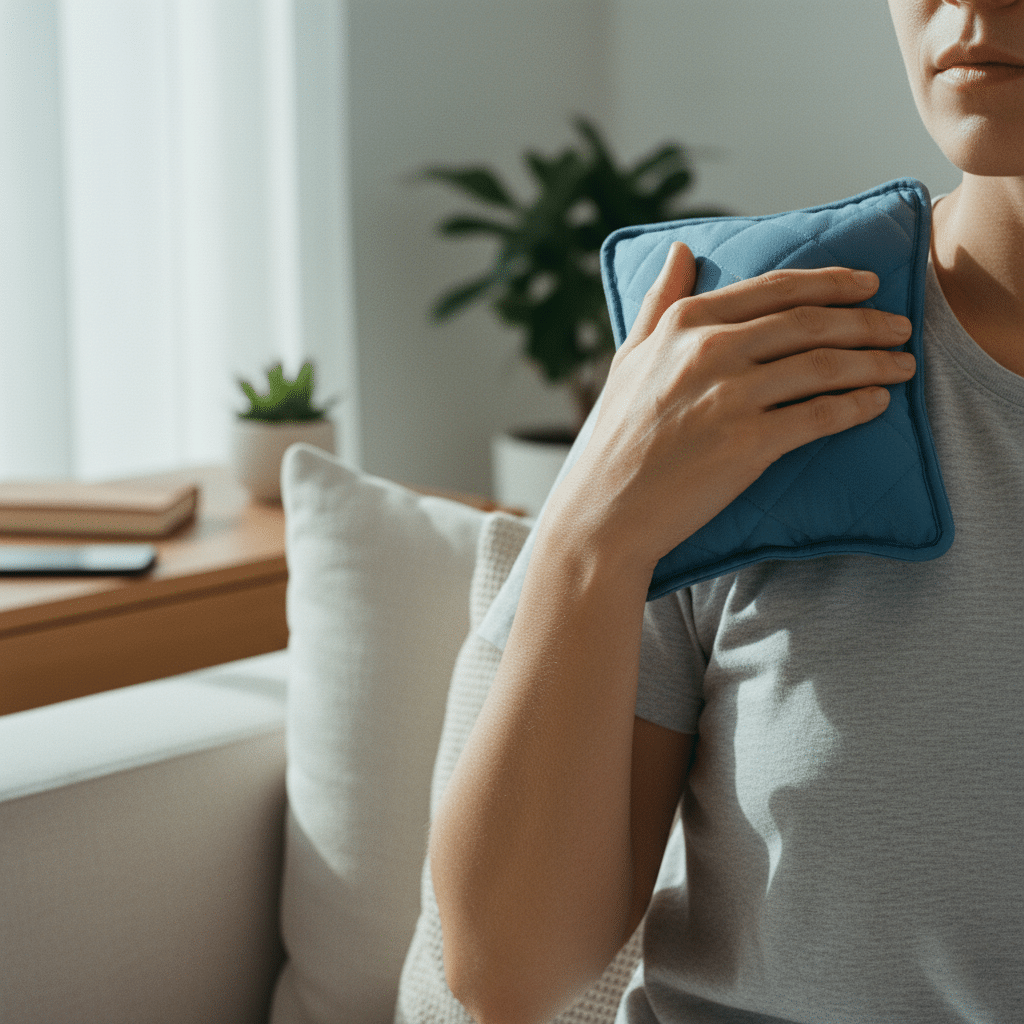
A post-operative bruising, medically known as Haematoma is defined as a collection of blood outside the blood vessels in body tissue. During any operation, however carefully it is performed to minimise damage to the tissue, small blood vessels under the skin are inevitably severed.
The blood leaking from these vessels collects in the surrounding tissue or in the resulting wound cavities and shines through the skin.
A bruise or a proper haematoma?
In everyday language, everything is often referred to as a „bruise“. Medically, however, there is an important difference when it comes to treatment:
Diffuse haemorrhage (a „bruise“)
The blood has spread widely throughout the tissue (e.g. in the subcutaneous fatty tissue). The skin is discoloured and slightly swollen, but is usually soft to the touch. This is harmless and is cleared by the body itself. Typically seen following liposuction or eyelid lifts.
The space-occupying haematoma
Blood has collected in an enclosed cavity (e.g. the implant pocket following breast augmentation) and forms a sort of blood blister. The tissue is often swollen, hardened and visibly bulges out. This can be painful and interfere with the healing process.
The healing process
A normal, flat bruise changes colour as the body breaks down the blood pigment (haemoglobin) through enzymatic action. This process usually takes between 1 and 3 weeks.
- Days 1–3 Red to dark blue/black: Fresh, oxygen-poor blood is accumulating. The swelling is at its worst.
- Days 4–7 Dark green: Haemoglobin is broken down into biliverdin.
- Days 8–14 Yellow to brown: Biliverdin is metabolised into bilirubin (yellow) and haemosiderin (brown). The bruise gradually fades and disappears.
Please note: Bruises often „slide“ downwards due to gravity. After a facelift, the bruising may appear on the neck; after abdominal surgery, it may appear in the groin. This is a normal occurrence.
What you can do yourself
You can actively support the body’s natural process of breaking down blood:
- Cooling (during the first 48 hours): Cold constricts the blood vessels, stops minor oozing and relieves pain. *Important: Never place cold packs directly on the skin (risk of frostbite) and do not use them during autologous fat transfer procedures (cold damages the transplanted cells).*
- Compression: Wearing prescribed compression garments (girdles, bras) consistently applies gentle pressure and prevents cavities from filling with blood.
- Elevate: Position the operated area (if possible) above heart level to facilitate the drainage of blood and lymph fluid.
- Preservation: During the first few weeks, avoid activities that raise your blood pressure (exercise, heavy lifting, saunas).
- Supportive preparations: Following consultation with your doctor, homeopathic remedies (such as Arnica), enzyme preparations (such as Bromelain) or ointments containing heparin can speed up the breakdown.
Warning signs (red flags)
A haematoma can become problematic if it is very large, exerts significant pressure (e.g. on nerves or the surgical suture) or becomes inflamed.
⚠ Warning!
Contact your doctor immediately if you experience any of the following symptoms:
- The swelling suddenly increases rapidly or becomes extremely firm (indicating active post-haemorrhage).
- The affected area is hot, extremely red, or you develop Fever (An indication of an infection).
- You feel throbbing, rapidly worsening pain, which cannot be controlled with the prescribed medication.
- The skin over the haematoma feels so tight that it becomes extremely discoloured (turning whitish/pale) – this carries a risk of impaired blood flow to the edges of the wound (necrosis).
- Special case: neck and face: If you experience sudden shortness of breath or difficulty swallowing following surgery in the neck area, call the emergency services immediately!
Surgical debridement and costs
If the body is unable to reabsorb a large, space-occupying haematoma on its own, or if there is significant secondary bleeding, the haematoma must be treated medically. This is done either by a Puncture (extraction using a needle) or a surgical revision (haematoma evacuation). During the revision procedure, the wound is reopened in the operating theatre under sterile conditions; the blood clot is removed, the source of the bleeding is cauterised and the wound is irrigated.
Who bears the costs of such a review?
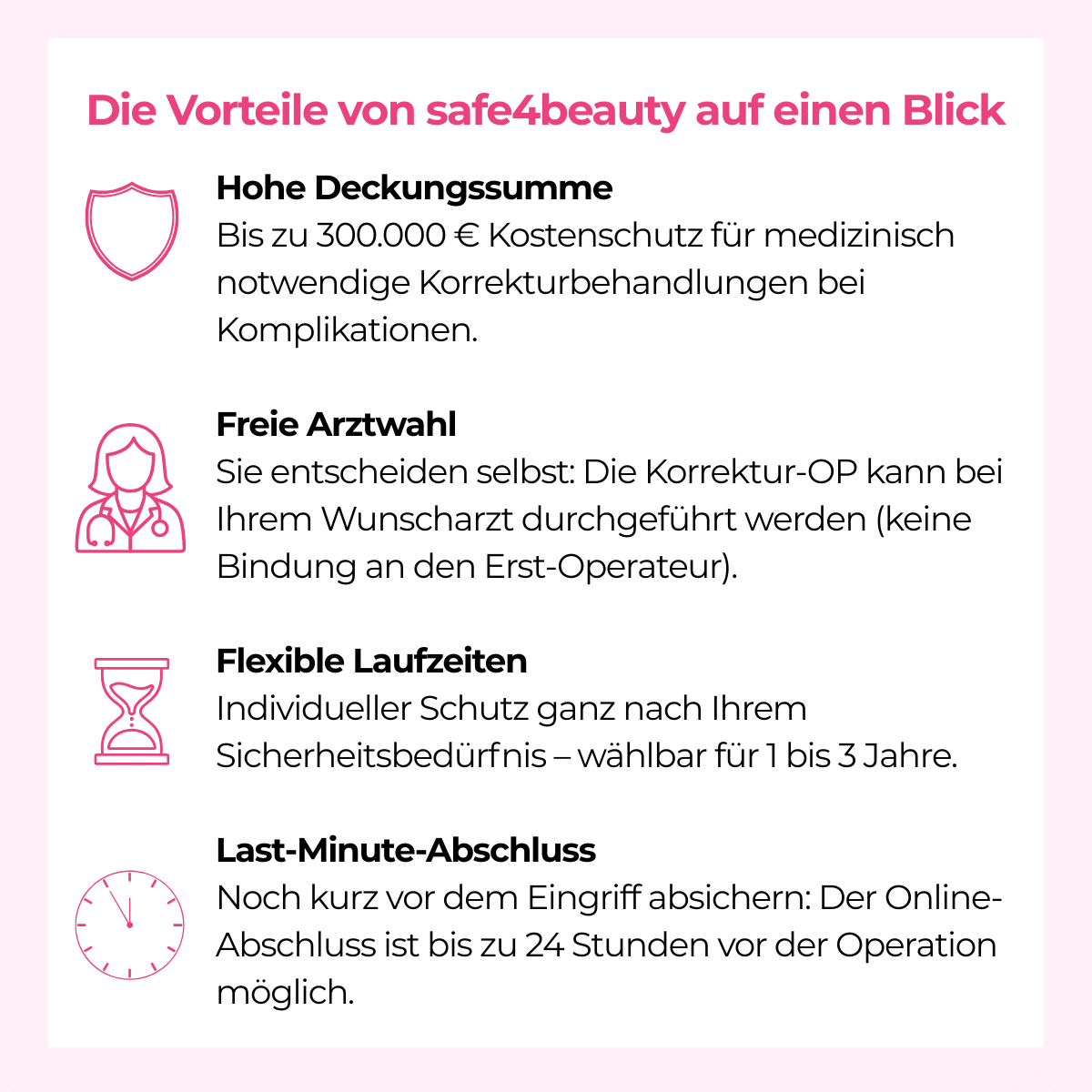
If this complication arises following a purely cosmetic (non-medically indicated) operation, Section 52(2) of the German Social Code, Book V (SGB V) often applies. The health insurance fund is then obliged to contribute an appropriate amount towards the treatment costs. For such unforeseeable cases, it is advisable to take out Consequential Costs Insurance the most important financial safeguard to ensure you are not left to foot the bill for the surgery to remove the haematoma.
Frequently Asked Questions (FAQ)
A normal, flat bruise usually disappears within 2 to 3 weeks. However, very large or deep haematomas may take several months to resolve completely.
During the first 48 hours, Cooling (not ice-cold!) is important to stop further bleeding and swelling. After that (from day 3 or 4), mild Heat help to stimulate blood circulation and speed up the removal of broken-down blood. Always discuss this with your doctor.
Gels containing heparin can help the bruise to heal more quickly. However, you must not never apply to fresh wounds or directly onto the stitches Apply as directed. Use ointments only around the edges and only after consulting a doctor.
Yes, when blood clots, the tissue often feels firm and lumpy. These hardened areas gradually resolve as the healing process progresses. If a lump persists, you should seek medical advice.