Aftercare following cosmetic surgery: What really matters for healing and results after the procedure
Surgery is only the first step – aftercare determines the final outcome. Here’s what you absolutely must do correctly in the first few weeks.

Anyone who decides to undergo cosmetic surgery is not only investing in their appearance, but also in a medical process that extends far beyond the actual day of the operation. Aftercare following cosmetic surgery is a key part of the process that is often underestimated – even though it plays a decisive role in determining what the final result will actually be.
Whether it is breast surgery, liposuction or a facial treatment, the body needs time to recover, rebuild tissue and adapt to the changes in its structure. During this phase, many patients are particularly sensitive – both physically and emotionally. Pain, swelling or an appearance that feels unfamiliar at first can be unsettling. This is precisely where a structured and well-understood aftercare programme comes into play.
The aim of this guide is to provide you with a clear overview of how you can actively support the healing process, which measures are genuinely effective, and what you should definitely bear in mind. After all, a good outcome is no accident, but rather the result of a combination of medical expertise and consistent aftercare.
Table of Contents
Important note
This article is for information purposes only and is not a substitute for a medical diagnosis or advice. If you are unsure, or if you require a personalised treatment plan, it is essential that you consult a qualified specialist.
Why post-operative care is just as important as the operation itself
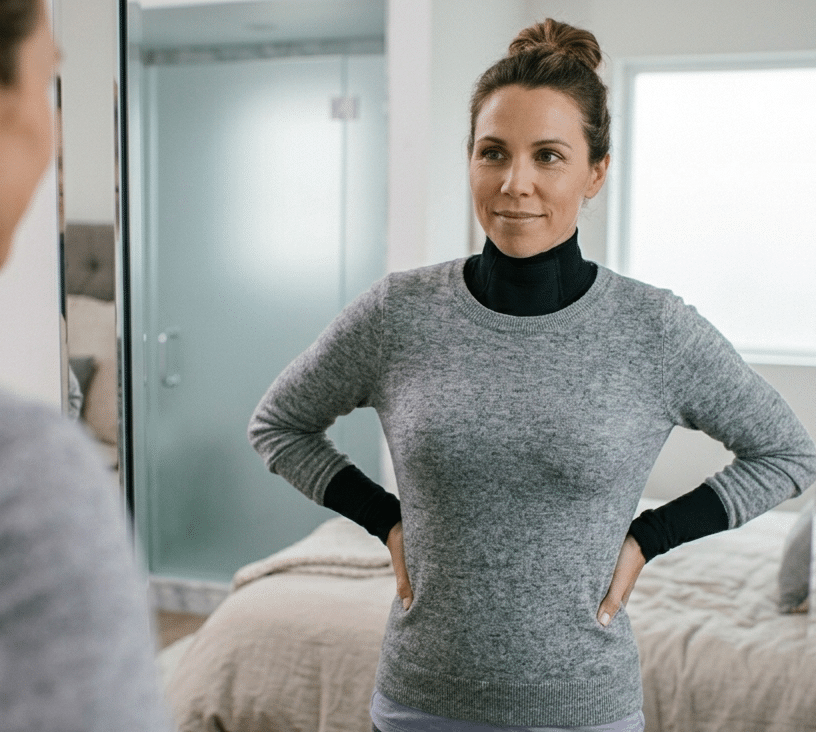
From a medical point of view, the surgical procedure is only the first step. What follows is a finely tuned biological process in which the body begins to repair and restructure the operated tissue. It is during this phase that it is determined whether the intended aesthetic result will actually be achieved or whether complications will arise.
Many patients assume that the doctor’s work is complete once the last stitch has been taken. In reality, however, a large part of the responsibility shifts to how they look after themselves following the operation. Anyone who fails to follow the recommended guidelines risks not only a longer recovery time, but also, in some circumstances, permanent cosmetic issues.
A crucial factor here is the stability of the tissue that has just undergone surgery. This tissue is particularly vulnerable to external influences during the first few weeks. Even seemingly minor mistakes – such as taking on physical exertion too soon or failing to wear compression garments – can have a negative impact on the healing process. Blood circulation also plays a key role: factors such as nicotine or certain medicines can significantly impair it and thus delay the recovery process.
At the same time, aftercare also serves a preventative purpose. It is designed to actively minimise risks such as impaired wound healing, infections or unsightly scarring. In this context, it is important to understand that many complications do not arise by chance, but are often attributable to preventable factors.
💡 Common mistakes in aftercare
Even when operations go well, avoidable problems do occur time and again. The most common of these are:
- Returning to sport or physical activity too soon
- Nicotine consumption, which significantly impairs wound healing
- Inadequate cooling during the acute phase
- Lack of or inconsistent scar care
- Taking unsuitable painkillers without medical advice (e.g. blood-thinning medication)
These factors can have a noticeable impact on the result and should be avoided at all costs.
The stages of healing: What happens in the body after the procedure?
How long does the recovery period last after cosmetic surgery?
It is not possible to give a general estimate of the duration of post-operative care following cosmetic surgery, as this depends heavily on the specific procedure and the individual’s circumstances. In most cases, however, the healing process takes several weeks to months. Whilst the first visible improvements often occur relatively early on, the final result usually only becomes apparent over the course of six to twelve months.
To better understand this process, it helps to break the healing process down into different stages. Each of these stages is characterised by specific physical reactions and requires an appropriate response.
The first few days: the acute phase and the inflammatory response
Immediately after the operation, the body enters a sort of protective and repair mode. The immune system responds to the procedure with a natural inflammatory reaction, which is necessary to regenerate damaged tissue. During this phase, swelling, bruising and a feeling of tightness typically occur.
These symptoms are generally no cause for concern, but rather a sign that the healing process has begun. It is now crucial not to put any additional strain on the body. Applying cold, resting and positioning the treated area correctly can significantly aid the initial stages of healing.
The first and second weeks: stabilisation and initial progress
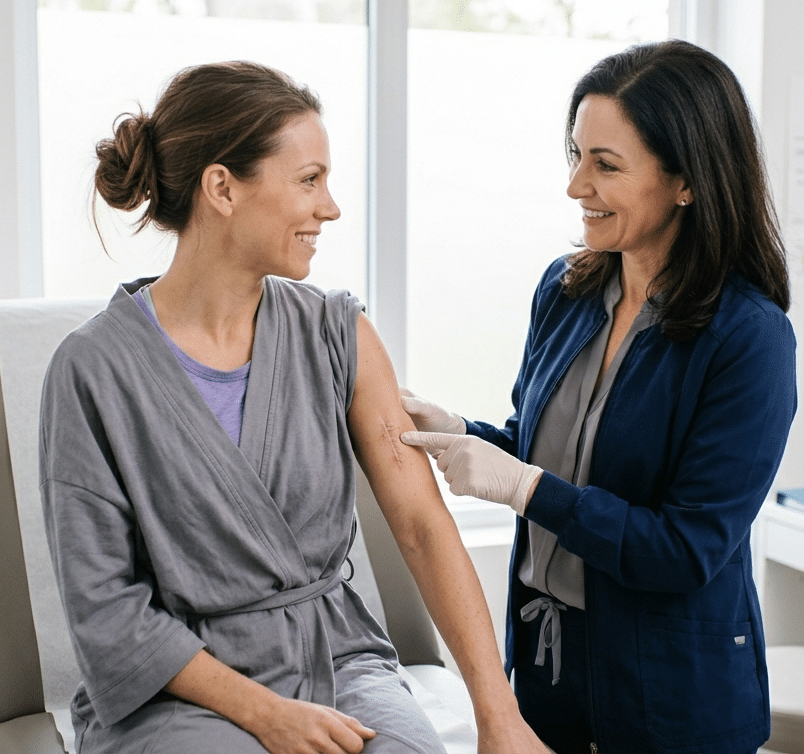
Over the following days, the condition begins to stabilise gradually. Swelling subsides, bruises fade and the initial contours become visible. Many patients find this phase particularly sensitive, as the result is visible but not yet final.
At the same time, important medical procedures take place, such as the removal of stitches or drains. The return to everyday life also begins gradually, with taking it easy remaining the top priority.
The following weeks: recovery and tissue repair
As the healing process progresses, the body gradually regains its stability. Collagen is produced, the tissue tightens and the areas that have undergone surgery adapt to their new shape. During this phase, physical activity can be increased gradually, but always in consultation with the treating doctor.
Many patients underestimate the fact that caution is still required at this stage. Excessive strain can compromise the results or even undo them.
Long-term recovery: the often underestimated timeframe
The body’s actual healing process takes place over a period of months. Scars change, becoming paler and softer, whilst any remaining swelling subsides completely. It is only at this stage that the final aesthetic result becomes apparent.
💡 Why patience is crucial
A common mistake is to evaluate the result too soon. The rule is:
- After just a few weeks, the swelling in the tissue has not yet completely subsided
- After a few months, a stable interim result is emerging
- It may take up to a year to get the final result
Patience is a key factor in how satisfied you are with the result.
The 5 pillars of optimal post-treatment care: How to support your recovery in a targeted way
Successful post-operative care following cosmetic surgery is not based on a single measure, but on a holistic approach. In practice, five key pillars have emerged which, together, stabilise the healing process, reduce complications and optimise the aesthetic outcome.
These pillars are interlinked – if you only take individual aspects into account, you are failing to make the most of the potential of the healing process.
Compression and support: stability for the tissue
Following many cosmetic procedures – particularly breast surgery, liposuction or tummy tucks – wearing compression garments is an integral part of aftercare. This applies targeted pressure to the tissue and helps the body to reduce fluid build-up and stabilise the new shape.
At the same time, compression prevents uncontrolled movements in the tissue which could lead to swelling or displacement. Many patients find it takes some getting used to at first, but the effect on healing is clearly proven by medical evidence.
At the same time, it is essential to take it easy physically. This does not mean complete immobility, but rather a controlled reduction in physical exertion. Particularly during the first few weeks, you should avoid sport, heavy lifting and sudden movements.
Proper scar care: the foundation for an aesthetically pleasing result
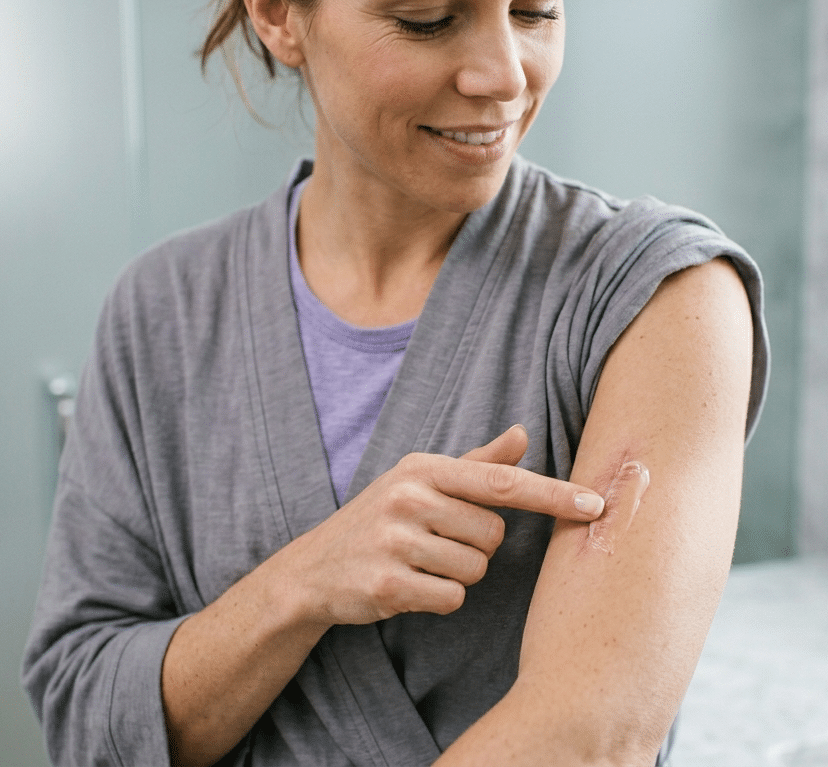
Scars are a natural part of any operation – but their appearance can be actively managed. Targeted scar care following surgery usually begins as soon as the wound has fully healed.
During this phase, the newly formed tissue is still undergoing restructuring. This process can be positively influenced through the use of suitable skincare products and protective measures. It is particularly important to ensure consistent protection against UV radiation, as sunlight can lead to permanent discolouration.
💡 Proven methods for scar care
- Use of silicone plasters or scar gels
- Regular, gentle scar massage (subject to medical approval)
- Daily sun protection with a minimum SPF of 50
- Avoiding mechanical irritation (e.g. tight clothing)
The aim is to achieve a scar that is as flat, light-coloured and inconspicuous as possible.

Diet and Lifestyle: Supporting Healing from Within
As well as external measures, the body’s internal condition also plays a crucial role. A balanced diet can significantly speed up the healing process and reduce the risk of complications.
Proteins, vitamin C and zinc, in particular, are essential for tissue regeneration. They promote collagen formation and support the immune system. At the same time, harmful factors such as alcohol and nicotine should be strictly avoided, as they impair blood circulation and hinder wound healing.
Drinking enough fluids also helps to stabilise your metabolism and reduce swelling more quickly.
An overview of common methods of aftercare
In addition to the basic guidelines on behaviour, there are a number of medical and supportive measures that are used specifically to optimise the healing process. These methods are employed depending on the type of procedure and individual needs, and should always be carried out in consultation with the treating doctor.
A key component is manual lymphatic drainage. It is frequently used following body-contouring procedures to help drain accumulated lymph fluid. Many patients report a significant reduction in feelings of tightness and swelling after just a few sessions.
Non-invasive procedures are also becoming increasingly important. Ultrasound treatments or low-intensity radiofrequency can stimulate blood circulation and support tissue regeneration. These methods are generally painless and are often used as a complementary treatment.
| Method | Purpose of the application | Typical time of use |
|---|---|---|
| Lymphatic drainage | Reduction of swelling | from a few days after the operation |
| Compression clothing | Tissue stabilisation | immediately after surgery (several weeks) |
| Cooling | Anti-inflammatory effect | the first few days after the operation |
| Ultrasound therapy | Promoting blood circulation | from 2–3 weeks |
| Scar care products | Improvement in the appearance of scars | after wound closure |
Personalisation is key
Not every method is equally suitable for every procedure. Whilst, for example, lymphatic drainage is almost standard practice following liposuction, it plays a less significant role in minor facial procedures.
It therefore follows that good aftercare is always tailored to the individual and takes into account both the procedure and the patient’s personal recovery process.
Sport, sun & sauna: When can I do these things again?
One of the most common questions regarding post-operative care following cosmetic surgery concerns returning to everyday life. Many patients want to know when they can resume exercising, go out in the sun or visit the sauna.
There is no one-size-fits-all answer to this, but it is based on clear medical principles: resuming physical activity too soon can jeopardise the outcome, whilst resting for too long can weaken the circulatory system and the muscles.
Exercise after cosmetic surgery: a gradual return to physical activity
Physical activity is generally beneficial to the healing process, but should be carried out in a controlled manner. During the first few weeks, the priority is to take it easy so as not to put strain on the tissue.
Light exercise, such as going for walks, is usually possible quite early on and is even recommended, as it promotes blood circulation and reduces the risk of blood clots. More strenuous exercise, however, should only be undertaken once a doctor has given the go-ahead.
Sun and UV radiation: a risk factor for scarring
Sun exposure is one of the most common causes of unsightly scars. Fresh scars are particularly sensitive to UV radiation and may become permanently discoloured.
It is therefore important to consistently avoid direct sunlight for several months. If exposure to the sun cannot be avoided, a high level of sun protection is essential.
Saunas and heat: take care in the early stages
Heat causes the blood vessels to dilate and can increase swelling. For this reason, saunas, hot baths and intense heat treatments should be avoided during the first few weeks.
Only once the recovery is well advanced can a gradual return take place.
Overview: When will what be allowed again?
| Activity | Recommendation |
|---|---|
| Gentle exercise | possible after a few days |
| Sport | after about 4–6 weeks (depending on the operation) |
| Sun | avoid for several months / protection required |
| Sauna | after 4–8 weeks at the earliest |
💡 A basic rule for everyday life
If in doubt, the rule is always: it’s better to wait a little longer than to start too soon. The body often gives clear signals – pain, a feeling of tightness or swelling are signs that should be taken seriously.
Minimising risks: What you absolutely must bear in mind
Even with careful planning and professional execution of a surgical procedure, risks can never be completely ruled out. However, it is crucial to note that many complications can be actively prevented or detected at an early stage through consistent aftercare following cosmetic surgery.
During the healing phase, the body sends out clear signals. Interpreting these correctly is an essential part of post-operative care. Whilst slight swelling, bruising or a feeling of tightness are completely normal in the first few days, there are certain warning signs that should not be ignored.
One risk factor that is often underestimated, for example, is impaired wound healing. This can be exacerbated by external factors such as nicotine, infections or mechanical stress. Taking unsuitable medication – particularly blood-thinning drugs – can also lead to secondary bleeding.
Warning signs: When you should definitely seek medical advice
Not every abnormality is automatically dangerous, but there are clear „red flags“ which require medical investigation.
💡 Emergency checklist following cosmetic surgery
Contact your doctor immediately if:
- severe swelling on one side
- persistent or worsening pain
- Fever or a general feeling of being unwell
- oozing, foul-smelling wound exudate
- sudden reddening or overheating of the wound
These symptoms may indicate infections, post-operative bleeding or other complications.

Prevention rather than reaction
The best way to protect against complications is through prevention. This involves, above all:
- strict adherence to medical instructions
- regular follow-up checks
- thorough hygiene in the wound area
- Avoiding nicotine and alcohol
One aspect that is often overlooked is what is known as thrombosis prophylaxis. Particularly in the case of major surgical procedures or prolonged immobility, it is important to reduce the risk of blood clots through exercise or, where necessary, medication.
Costs of aftercare: What is included in the price?
One aspect that is often underestimated during the planning stage is the cost of post-operative care following cosmetic surgery. Whilst many patients focus closely on the cost of the operation itself, the follow-up costs are often only given passing consideration.
Depending on the procedure and the course of recovery, these can account for a significant proportion of the total costs.
What services are usually included?
In many cases, basic aftercare services are already included in the price of the operation. These typically include:
- Follow-up appointments with your doctor
- Changing dressings and checking wounds
- Pulling strings
- basic advice on aftercare
However, any measures beyond this are often subject to a charge.
An overview of typical additional costs
| Measure | Costs (approx.) |
|---|---|
| Lymphatic drainage | €50–100 per session |
| Scar care products | €20–100 |
| Compression clothing | €50–300 |
| Medicines | individual |
| Additional treatments | variable |
Coverage by health insurance schemes
As cosmetic procedures are generally privately funded, statutory health insurance schemes do not usually cover the costs of aftercare. Exceptions are made only if medical complications arise that necessitate treatment.
This makes it all the more important to calculate the total costs realistically and to factor in potential risks financially.
Post-operative care: Why insurance to cover follow-up costs can be a good idea
Despite careful planning and diligent aftercare, complications may arise that require further medical treatment. These range from minor corrections to more complex follow-up procedures.
This is precisely where a specialist Insurance covering the costs of follow-up treatment for cosmetic surgery – such as our 4beauty solution, for example.
What does follow-on costs insurance cover?
Depending on the policy, this type of insurance covers costs that may arise from medically necessary follow-up treatment. These include, amongst other things:
- hospital stays in the event of complications
- necessary follow-up operations
- medical treatment and diagnostics
- Medicines and therapeutic measures
This can provide considerable financial relief, particularly in cases where the course of recovery is unexpected.
💡 Who should consider taking out cover?
Insurance against consequential costs is particularly recommended for:
- Patients undergoing major surgery
- Treatments with a higher risk profile
- People who want maximum financial planning security
It complements medical aftercare by providing important financial security.
Aftercare and patience are the key to success
Cosmetic surgery does not end in the operating theatre – that is where it really begins. Aftercare following cosmetic surgery is the key factor in determining whether a procedure is successful in the long term.
Anyone who takes the healing phase seriously, actively supports it and is aware of the potential risks creates the best conditions for an aesthetically pleasing and medically safe outcome.

Checklist: The key points at a glance
- Follow aftercare instructions carefully
- Take compression garments and rest seriously
- Start scar care early
- Recognising warning signs and responding
- Be patient with the healing process
- Assessing financial risks realistically
FAQ – Frequently asked questions about post-operative care following cosmetic surgery
Depending on the procedure, the recovery period can last from a few weeks to several months. The final result is often only visible after six to twelve months, as the body needs time to fully recover.
A healthy lifestyle is crucial. This includes getting enough rest, eating a protein-rich diet, avoiding nicotine and following your doctor’s instructions carefully. Supportive measures such as lymphatic drainage can also help.
Light exercise is often possible quite early on, but more strenuous sport should only be undertaken after around four to six weeks – depending on the procedure and how well you are recovering.
Applying cold compresses in the first few days, wearing compression garments and, where appropriate, lymphatic drainage are tried-and-tested methods for reducing swelling.
If you experience any unusual symptoms, such as severe pain, a fever, swelling on one side or unusual discharge from the wound, you should seek medical advice immediately.
You might also be interested in this
-

Treatments
Tummy Tuck: Everything You Need to Know at a Glance
A toned tummy, a new-found confidence – but which method is right for you, what does the recovery process involve, and what costs can you expect? All the key answers at a glance.
-

Treatments
Eyelid Lift: The Comprehensive Guide
Drooping eyelids can make your eyes look tired. Find out what treatment options are available, what aftercare involves, and what risks and costs you should bear in mind.
-

Costs & Insurance
How much does cosmetic surgery really cost? Total costs, follow-up costs and financial risks
The price quoted by the surgeon rarely covers the actual costs of cosmetic surgery. Anaesthesia, aftercare and any complications can drive the price up considerably.
-

Risks & Complications
Buttock Augmentation: Risks and Complications – Your Comprehensive Guide to Making an Informed Decision
Many people dream of having a shapely bottom – but bottom augmentation is also a matter of safety. What risks and complications should you be aware of beforehand?
-

Treatments
Everything you need to know about a forehead lift: techniques, aftercare, costs and risks
Tired-looking eyes, drooping eyebrows, deep wrinkles? A forehead lift can visibly rejuvenate your appearance. Find out what methods are available and what you need to bear in mind regarding aftercare and costs.
-

Treatments
Male genital cosmetic procedures – methods, costs and risks of intimate surgery explained in simple terms
More and more men are finding out about genital cosmetic procedures – which involve far more than just penis enlargement. We provide honest information about the methods, procedures, risks and costs.