Dysphoria
Dysphoria refers to an aversive emotional state characterised by sadness, irritability, restlessness, anxiety or dissatisfaction, and is the opposite of euphoria.
Table of Contents
Important note
This article is for information purposes only and is not a substitute for a medical diagnosis or advice. If you are unsure, or if you require a personalised treatment plan, it is essential that you consult a qualified specialist.
Definition of dysphoria
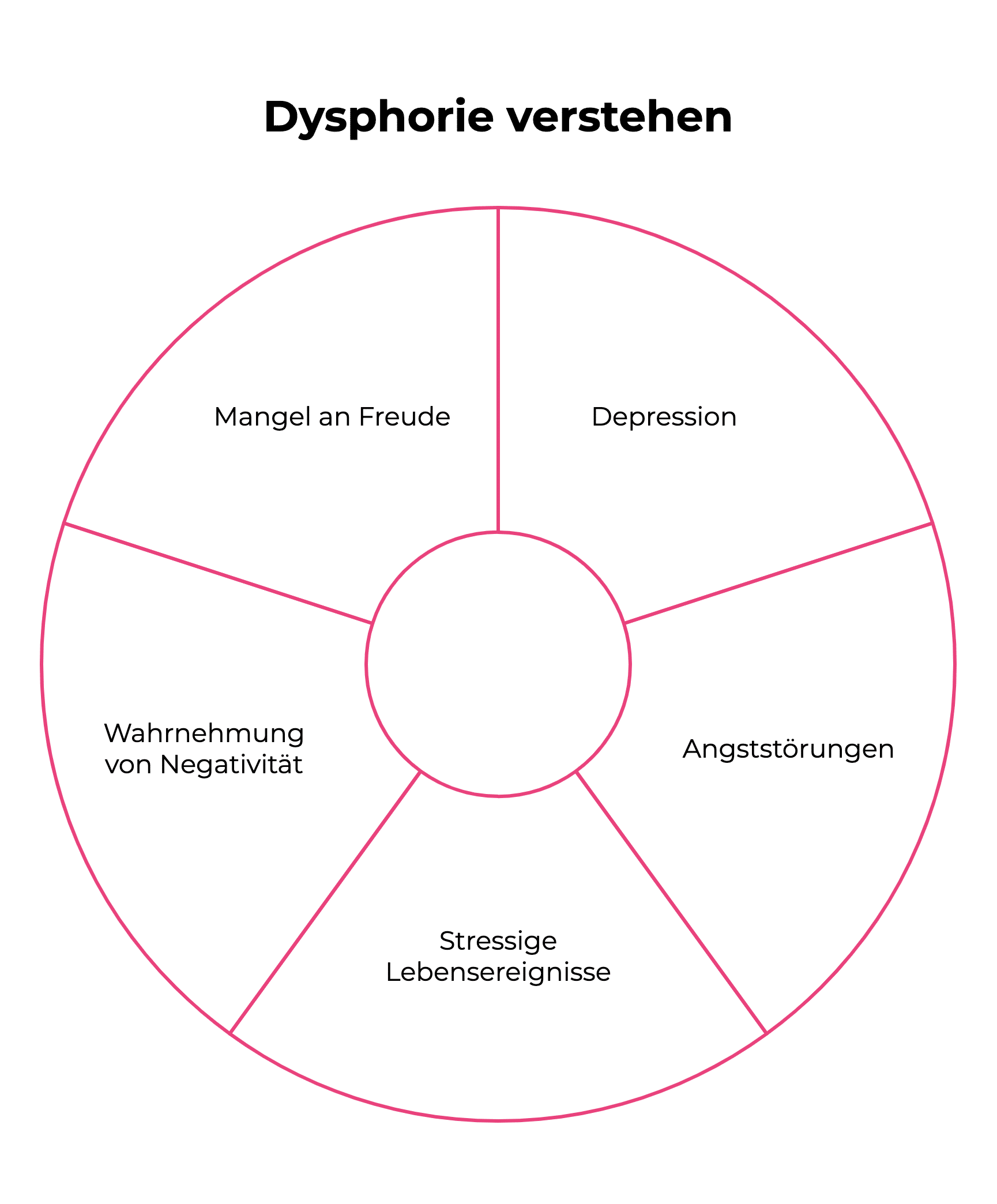
Dysphoria (derived from the Greek „dysphoros“, meaning „difficult to bear“) refers to an aversive emotional state characterised by feelings of sadness, irritability, restlessness, anxiety, tension or general dissatisfaction with oneself or one’s life situation. It contrasts with euphoria (a state of elevated mood). Dysphoria can range from mild low mood to severe psychological distress.
The aim of understanding dysphoria is to recognise this condition, identify its possible causes and be able to direct those affected towards appropriate support services. The aim is not to dismiss dysphoria as merely a „bad mood“, but to recognise it as a serious indication of a possible underlying problem.
Causes of dysphoria
The causes of dysphoric states are multifactorial and complex. They may involve biological, psychological and social factors:
- Neurobiological factors: Imbalances in neurotransmitters in the brain (e.g. serotonin, dopamine, noradrenaline), hormonal fluctuations (e.g. as part of the menstrual cycle, thyroid dysfunction).
- Psychological factors: Stress, traumatic experiences, unresolved inner conflicts, low self-esteem, certain personality traits or disorders.
- Mental health conditions: Dysphoria is a common symptom of depression, anxiety disorders, bipolar disorder, personality disorders (e.g. borderline personality disorder), schizophrenia and body dysmorphic disorder.
- Gender dysphoria: A profound sense of unease or distress resulting from the incongruence between the sex assigned at birth and one’s own gender identity.
- Physical illnesses: Chronic pain, serious or chronic physical illnesses.
- Substance use: The effects of, or withdrawal from, alcohol, drugs or certain medicines.
- Situational factors: Stressful life events, social isolation, experiences of discrimination.
Symptoms of dysphoria
Symptoms can be varied and differ from person to person:
- Emotional symptoms: Persistent sadness, low mood, irritability, tearfulness, anxiety, restlessness, tension, a feeling of emptiness, hopelessness, despair, feelings of worthlessness or guilt.
- Cognitive symptoms: Difficulty concentrating, negative thoughts about oneself, others or the future, pessimism, brooding.
- Behavioural symptoms: Social withdrawal, loss of interest (anhedonia), lack of motivation, sleep disturbances (sleeping too much or too little), changes in appetite, increased tendency to argue.
- Physical symptoms: Fatigue, lack of energy, non-specific physical symptoms (e.g. headaches, muscle tension).
Forms and types of dysphoria
It is important to distinguish between different specific forms or contexts of dysphoria:
- Gender dysphoria: Defined by clinically significant distress resulting from a mismatch between the assigned sex and the experienced gender identity. It is classified as „Gender Incongruence“ in the ICD-11 and as „Gender Dysphoria“ in the DSM-5.
- Body dysphoria (in the context of body dysmorphic disorder, BDD): An excessive preoccupation with one or more perceived flaws in one’s physical appearance, which are scarcely noticed, if at all, by others. This leads to considerable distress and impairment.
- Premenstrual Dysphoric Disorder (PMDD): A severe form of premenstrual syndrome (PMS) with pronounced psychological symptoms, including dysphoria, during the second half of the menstrual cycle.
- Substance-induced dysphoria: Dysphoric states during the use of or withdrawal from psychoactive substances.
- Dysphoria as a concomitant symptom: Occurrence in the context of other mental or physical illnesses (see causes).
Distinction from similar conditions
- Normal sadness/low mood: Temporary emotional reactions to stressful events that are appropriate to the situation, but do not reach the intensity, duration or level of impairment associated with clinically significant dysphoria.
- Mourning: A natural process of coming to terms with a loss, which, whilst painful, goes through specific stages and differs from the often vague and persistent nature of dysphoria.
- Depression: There is considerable overlap. Dysphoria can be a core symptom of depression. However, major depression is defined by further specific criteria (e.g. duration, number of symptoms, severity).
Management and treatment options
Treatment depends on the cause and severity of the dysphoria:
- Identification of the causes: A thorough diagnostic assessment is crucial.
- Psychotherapy: Various approaches can be helpful, e.g. cognitive behavioural therapy (CBT), dialectical behaviour therapy (DBT) and depth psychology-based psychotherapy.
- Drug treatment: Depending on the underlying condition, antidepressants, mood stabilisers or other psychotropic drugs may be prescribed.
- Treatment of the underlying condition: Where the causes are physical, the focus is on treating the underlying condition.
- Specific treatment for gender dysphoria: This includes social and psychotherapeutic support and, where appropriate, medical interventions for gender affirmation (hormone therapy, surgical procedures), guided by the needs of the individual concerned and international standards of care.
- Lifestyle changes: Stress management techniques, sufficient sleep, a healthy diet, regular exercise and social support can all be helpful.
When should you seek professional help?
Professional help should be sought if:
- The feelings of dysphoria persist over a prolonged period.
- There is a considerable degree of psychological distress.
- Functioning in everyday life (work, social relationships, self-care) is impaired.
- Suicidal thoughts or self-harming behaviour may occur.
- There is a suspicion of a specific condition such as gender dysphoria or body dysmorphic disorder.
The first points of contact may be GPs, psychotherapists or specialists in psychiatry and psychotherapy.
Coverage of the costs of therapeutic measures
- Psychotherapy: In the event of a clinical disorder (e.g. depression, anxiety disorder, KDS, gender dysphoria causing psychological distress), the costs of outpatient or inpatient psychotherapy are usually covered by the statutory health insurance funds covered following the submission of a claim and approval. Private health insurance schemes have their own rules.
- Drug treatment: The cost of medically prescribed medication is usually covered by health insurance funds where there is a valid medical indication (subject to a co-payment where applicable). The exact conditions for cost coverage should always be clarified on a case-by-case basis with the relevant health insurance fund and the treating therapist or doctor.
Frequently Asked Questions about Dysphoria
Dysphoria describes a persistent negative mood characterised by dissatisfaction, irritability or inner restlessness. It can occur as a symptom of various mental health conditions or be caused by external factors such as stress or hormonal changes.
The treatment of dysphoria depends on its cause. The following approaches are often combined: Psychotherapy (Cognitive behavioural therapy helps people to recognise and change negative thought patterns); Drug therapy (in some cases, antidepressants or mood stabilisers may be appropriate); Lifestyle changes (regular exercise, a healthy diet and sufficient sleep can help maintain emotional balance); Social support (Talking to others, for example in self-help groups, can be helpful).
The most common symptoms include: persistent sadness or irritability; inner restlessness or nervousness; difficulty concentrating or making decisions; low self-esteem or self-worth; social withdrawal or isolation; changes in appetite or sleeping patterns; physical symptoms such as headaches or gastrointestinal problems.
Yes, there are a few tips that can help you cope with dysphoria: Mindfulness and meditation promote relaxation and help to calm the mind. Creative expression Activities such as painting, music or writing can help relieve emotional tension. Keeping a diary can provide clarity and make it easier to deal with emotions. Maintaining social contacts Being around understanding people can help to reduce feelings of isolation.
Psychotherapy (cognitive behavioural therapy, in particular, has proved effective); Drug treatment (antidepressants or other medicines may be used if necessary); Lifestyle changes (regular exercise, a healthy diet and sufficient sleep help maintain emotional balance); Social support (Getting in touch with self-help groups or people who can offer support may be helpful).