Definition: What does ‘female-to-male’ (FtM) mean?
Female-to-Male (FtM) refers to a person who was assigned female at birth but who identifies as male.
Table of Contents
Important note
This article is for information purposes only and is not a substitute for a medical diagnosis or advice. If you are unsure, or if you require a personalised treatment plan, it is essential that you consult a qualified specialist.
The term Female-to-Male (FtM) describes a person who was assigned female at birth but who identifies as male. This encyclopaedia-style article explores various aspects of this identity and the process of transition that is often associated with it.
The experiences of FtM individuals are diverse and are described in detail in numerous studies and books, for example by researchers such as Aaron H. Devor.
Identity and self-perception: putting people first
The male gender identity of FtM people is a fundamental aspect of their personality. It is not a matter of choice, but rather a deeply felt sense of one’s own sex and gender identity. Contemporary literature on transgender people and the lives of trans men highlights the diversity of these experiences. The aim is often to live a life in harmony with this identity.
Gender dysphoria in the FtM context
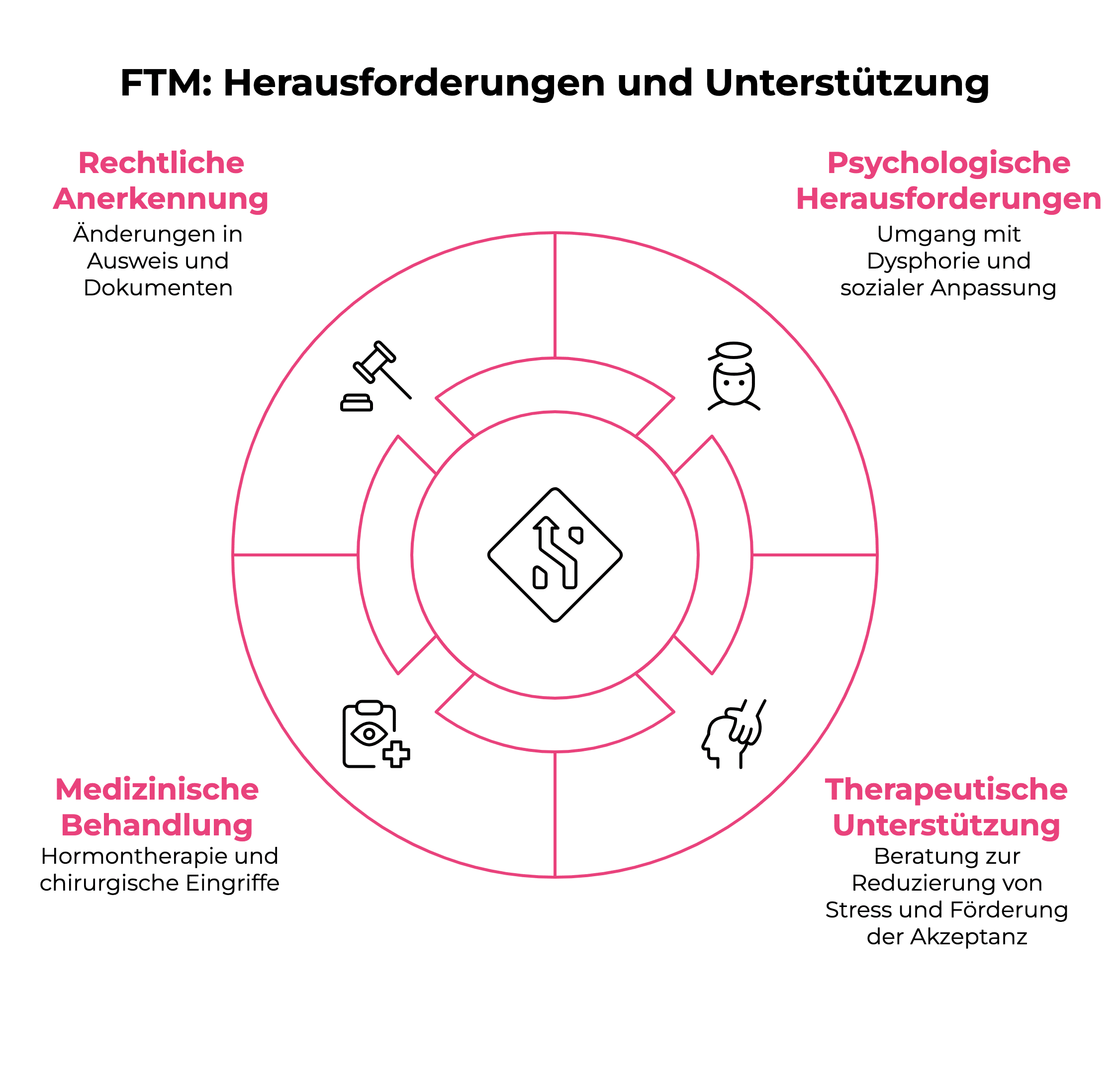
Many, though not all, FtM people experience gender dysphoria. This is a clinically significant form of distress resulting from the incongruence between their male identity and the female sex characteristics assigned at birth.
This medical aspect is often a key factor in the decision to transition.
The Transition: A Personal Journey of Change
Transition is a very personal process and can involve various stages of transformation. Not every trans person wants or needs all the options available.
Social and psychological aspects of transition
Social transition often involves coming out, adopting a male name (e.g. Aaron, as a hypothetical example), using male pronouns and adjusting one’s physical appearance. Psychological counselling can support this process.
Medical aspects of the transition
Medical measures may include:
- Hormone therapy: Administration of testosterone to induce male secondary sexual characteristics.
- Surgical procedures:
- Mastectomy (removal of the breast glands).
- Hysterectomy/oophorectomy (removal of the womb and ovaries).
- Genital reconstruction surgery, such as phalloplasty or metoidioplasty.
The medical and legal context in Germany
The medical and legal context is of great importance to trans people. Medical transition steps should ideally be carried out in accordance with current standards and under the supervision of experienced specialists. Legally, many seek to change their name and gender designation. The (proposed) Self-Determination Act in Germany aims to simplify this process.
Terminology and alternative names: Respectful language use
As well as ‘FtM’, terms such as ‘trans man’, ‘transmasculine person’ or simply ‘man (with trans* experience)’ are frequently used. It is crucial to use respectful terminology chosen by the person themselves.
Further information and research
Extensive research and literature on transgender people provide deeper insights into the experiences and social aspects of FtM men. The work of sociologists such as Aaron H. Devor (e.g. his book FTM: Female-to-Male Transsexuals in Society or Gender Blending) provides a detailed account of the lives of trans men and their transitions. Such works are important resources for gaining a better understanding. This encyclopaedia aims to provide an initial overview.
Coverage of costs for transitional measures
In Germany, health insurance funds may, in principle, cover the costs of medical transition procedures where there is a medical necessity (gender dysphoria), but this often requires expert opinions and an application process.