Xanthelasma: causes, significance and methods of removal
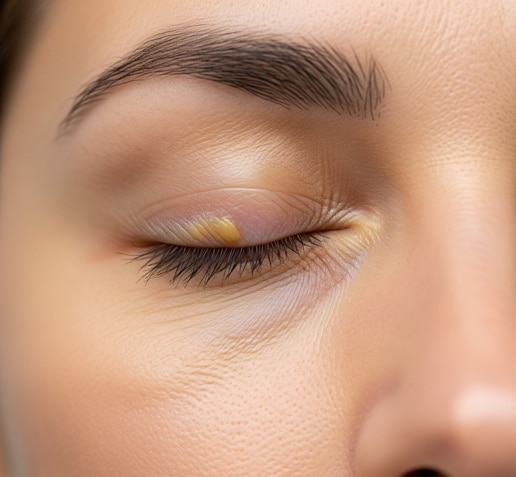
Xanthelasma are sharply defined, yellowish-white patches on the eyelids – usually a cosmetic issue, but sometimes also a warning sign from the body.
Suddenly, they appear: sharply defined, yellowish-white, slightly raised patches on the upper or lower eyelids. These harmless-looking skin changes are known as Xanthelasma They are well known and, for many people affected, a cosmetic problem. Yet they can be more than just that – namely, an important warning sign from the body.
This glossary entry explains exactly what xanthelasma are, why their discovery warrants a visit to the doctor, and what modern methods are available to remove them safely and effectively.
Table of Contents
Important note
This article is for information purposes only and is not a substitute for a medical diagnosis or advice. If you are unsure, or if you require a personalised treatment plan, it is essential that you consult a qualified specialist.
What are xanthelasmas? A definition
Xanthelasma (Greek xanthos = yellow, elasma = Plaques) are benign, yellowish deposits of fat or cholesterol in the skin of the eyelids.
They are caused by the build-up of cholesterol and other fats in the skin of the eyelids. This is often due to a lipid metabolism disorder, although xanthelasmas can also occur even when blood lipid levels are normal. They feel soft or semi-firm to the touch and do not cause any pain.
The cause: More than just a skin problem
Xanthelasma are harmless in themselves. However, their significance often lies in their cause. In many cases, they are a visible sign of a Lipid metabolism disorder (hyperlipidaemia), i.e. elevated blood lipid levels, particularly high cholesterol levels. However, they can also occur even when blood test results are normal.
Think of a xanthelasma as the tip of an iceberg. It is the visible part. The much larger and potentially more dangerous part – elevated blood lipid levels – lies hidden within the body and can increase the risk of cardiovascular diseases such as atherosclerosis, heart attack or stroke.
That is why the first step when dealing with xanthelasma is always to see your GP or a consultant in internal medicine to have your blood lipid levels checked!
Removing xanthelasma: What methods are available?
| Method | Mechanism of action | Advantages | Disadvantages / Risks |
|---|---|---|---|
| Laser treatment | Ablation of skin layers using CO₂ or erbium:YAG lasers | Highly precise, minimal bleeding, often good cosmetic results | Hypo- or hyperpigmentation may occur; requires experience |
| Surgical excision | Excision using a scalpel and fine sutures | Complete removal in a single session; effective for deep xanthelasmas | Scarring; in cases of extensive lesions, there is a risk of eyelid retraction |
| Electrocautery | „Burning“ the tissue with an electric current | Quick and effective for small, shallow lesions | Higher risk of scarring and pigmentation disorders than with laser treatment |
| TCA peel | Chemical burns to the upper layers of the skin caused by trichloroacetic acid | Non-invasive, no injections, no scars | Only suitable for very mild cases; several sessions are required |
Risks and safety considerations associated with xanthelasma treatment
Although the removal of xanthelasma is a routine procedure, it is carried out in the highly sensitive area around the eyes. Risks such as Infections, Problems with wound healing, visible scars or a change in the position of the eyelid (particularly following surgical removal) can never be completely ruled out. Furthermore, xanthelasma tends to recur; in other words, it may reappear, particularly if the underlying lipid metabolism disorder is left untreated.
One Consequential Costs Insurance provides financial security in the event that a medically necessary correction becomes required following the cosmetic procedure, for example due to an unsightly scar or a complication.
None
Frequently Asked Questions (FAQ) about xanthelasma
The deposits themselves are benign and not dangerous. However, in many cases they are an important warning sign of elevated blood lipid levels, which pose a serious health risk.
The procedure is usually carried out by dermatologists, ophthalmologists specialising in eyelid surgery, or plastic surgeons. However, you should first see your GP to have your blood test results checked.
In most cases, the removal is regarded as a purely cosmetic procedure and the costs are therefore not covered by statutory health insurance. Only in rare exceptional cases, for example where the field of vision is restricted, may the costs be covered.
Yes, the recurrence rate is relatively high. If a lipid metabolism disorder is present and left untreated, the likelihood of recurrence is particularly high.
Under no circumstances. Attempting to squeeze out, remove or treat the deposits yourself using home remedies is extremely dangerous. It will inevitably lead to serious injury, inflammation and scarring of the delicate skin of the eyelids.