Seroma formation: the underestimated complication following liposuction and tummy tucks
A seroma is one of the most common, yet most underestimated, complications following liposuction and a tummy tuck. How does it develop, when is it treated, and what does health insurance not cover?

Serum formation:
A seroma is an accumulation of serous fluid — lymph, exudate or blood serum — in a newly formed tissue cavity following surgical procedures. Seromas occur particularly following extensive surgery such as abdominoplasty or liposuction and resolve within a few weeks.
Table of Contents
Important note
This article is for information purposes only and is not a substitute for a medical diagnosis or advice. If you are unsure, or if you require a personalised treatment plan, it is essential that you consult a qualified specialist.
Anyone planning liposuction or a tummy tuck naturally focuses on the desired result. However, even with carefully performed procedures, wound complications can arise. Seroma formation is one of the most common of these — and is also the most frequently underestimated. Understanding how seromas develop, when they need to be treated and what costs may be involved helps you to prepare properly for the operation.
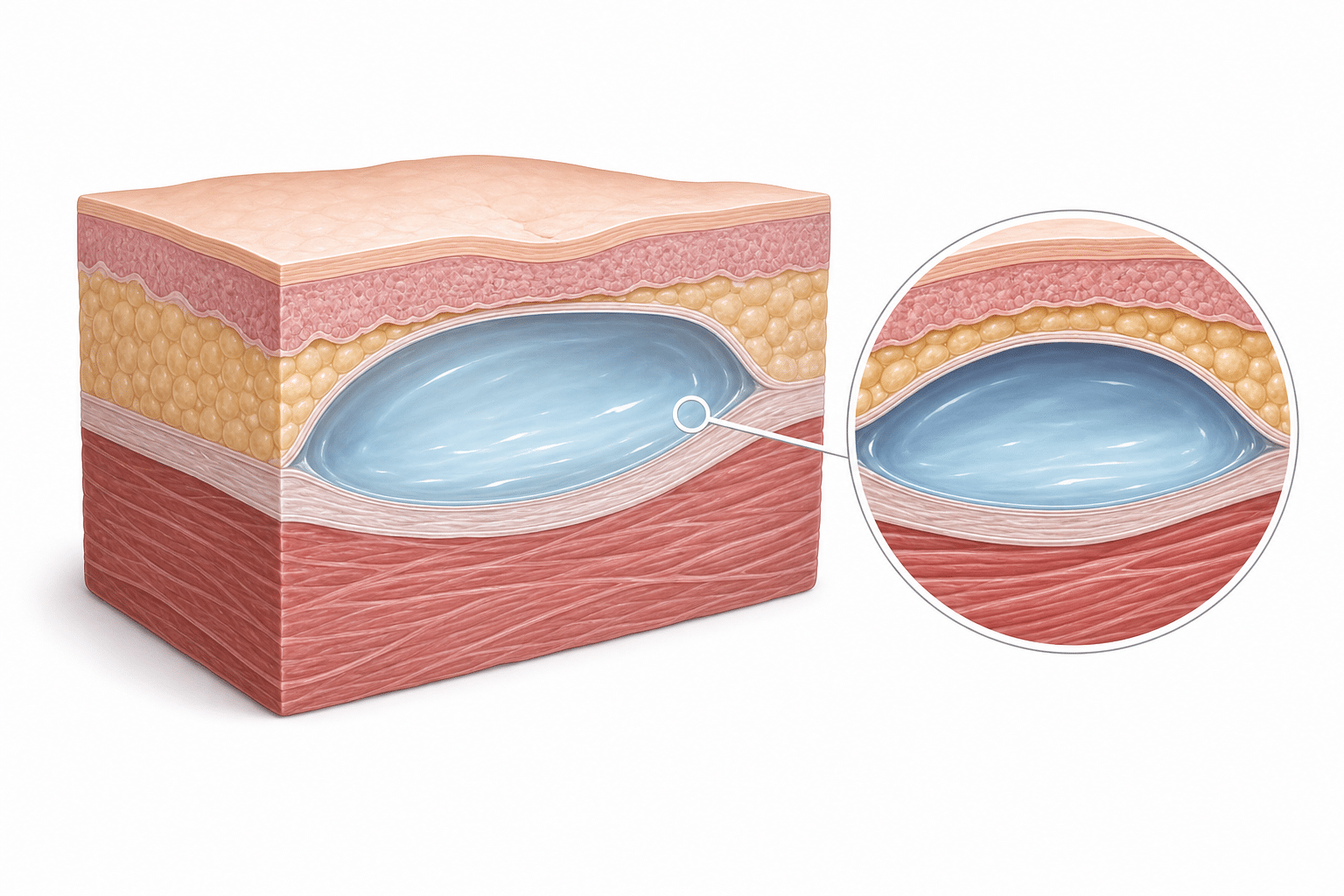
What is a seroma? Definition, symptoms and how it differs from other conditions
- Seroma = an accumulation of fluid (lymph, exudate, blood serum) in a newly formed tissue cavity
- Also known as a pseudocyst — a cyst without a true cell wall
- Typical symptoms: visible swelling, a feeling of pressure, a feeling of tightness around the wound
- Occurs particularly following major surgery: abdominoplasty, liposuction, mastectomy
A seroma develops when wound fluid accumulates in a cavity following a surgical procedure. This cavity forms between the skin flaps and the underlying tissue. The secretion consists of serous fluid — a mixture of lymph, exudate and blood serum — which cannot be drained via the body’s normal drainage channels. Externally, a seroma appears as a soft, palpable swelling in the surgical area. Those affected may experience a sensation of tightness or pressure.
Medically speaking, seromas are regarded as an aseptic wound-healing disorder. This means that they develop without the involvement of bacteria. As long as there is no accompanying infection, they do not pose an immediate danger. Nevertheless, they can slow down the wound-healing process. In the worst-case scenario, secondary problems such as skin flap necrosis or chronic inflammation may develop.
Seroma, haematoma or abscess: the key differences
| Characteristic | Serom | Haematoma | Abscess |
|---|---|---|---|
| Contents | Lymph, exudate, serum (clear, yellowish) | Blood (red to dark brown) | Pus (cloudy, bacterial) |
| Cause | Damaged lymphatic vessels, dead space | Damaged blood vessels | Bacterial infection |
| Pain | Usually mild, sensation of pressure or tightness | Pain, skin discolouration | Severe pain, fever |
| Treatment | Wait and see, puncture, drainage | Puncture, or surgical debridement if necessary | Antibiotics, surgical incision |
| Spontaneous healing? | Possible in the case of small seromas | Possible in the case of small haematomas | No — treatment required |
Causes of seroma formation: When and why does a seroma develop?
- Main cause: injury to lymph vessels during surgery
- Risk factors: being overweight, diabetes, high blood pressure, advanced age
- Seromas typically occur in the first few days to two weeks following the operation
- According to the available research, the incidence rate for abdominoplasties is between 5 % and 50 %
The exact pathophysiology of seroma formation has not yet been conclusively established from a medical perspective. The main mechanism is thought to be damage to the lymph vessels, which are severed during surgery. Lymph is then unable to drain properly. It accumulates in the newly formed cavity between the tissue and the skin flap. In addition, the damaged tissue produces exudate, which also accumulates there.
What risk factors contribute to the formation of a seroma?
Known risk factors include being overweight (obesity), diabetes mellitus, high blood pressure and advanced age. Procedures involving particularly large wound areas also increase the risk — such as extensive liposuction or mastectomies.
According to a review article in the journal Phlebology (Dehoust, Bruning, Woitalla-Bruning, 2026) Various risk factors and surgical techniques have a significant influence on the occurrence of seromas. Large-scale interventions are particularly affected: In abdominoplasty procedures, seromas occur in between 5 % and 50 % of patients who undergo the operation. This range depends on the extent of skin excision and individual risk profiles.
In most cases, it develops within the first two weeks following the operation. Sometimes the seroma only becomes clinically visible once the drainage tubes have been removed. Anyone who belongs to a high-risk group should therefore actively discuss this issue with their surgeon before the operation.
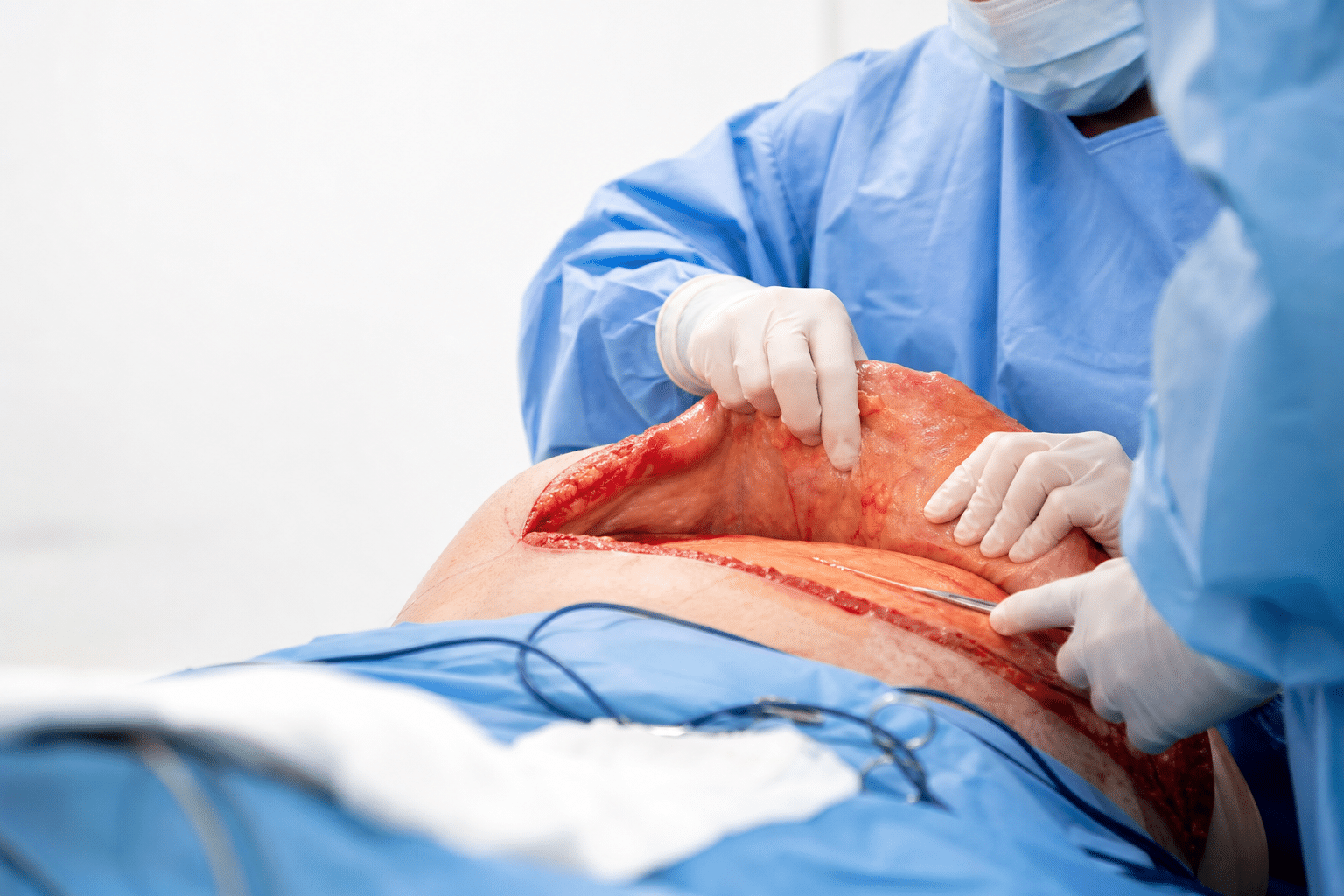
Treating seroma: from watch-and-wait to aspiration
- Small, asymptomatic seromas resolve on their own within a few weeks
- Compression bandages can reduce fluid build-up
- In the case of persistent or larger seromas: aspiration (puncture) using a needle
- Repeated punctures or drainage may be necessary in persistent cases
The treatment of a seroma depends on its size, the symptoms and how it has developed over time. There are essentially three stages of treatment.
Serom treatment stages according to size and progression. As at July 2026. Not a substitute for medical advice.
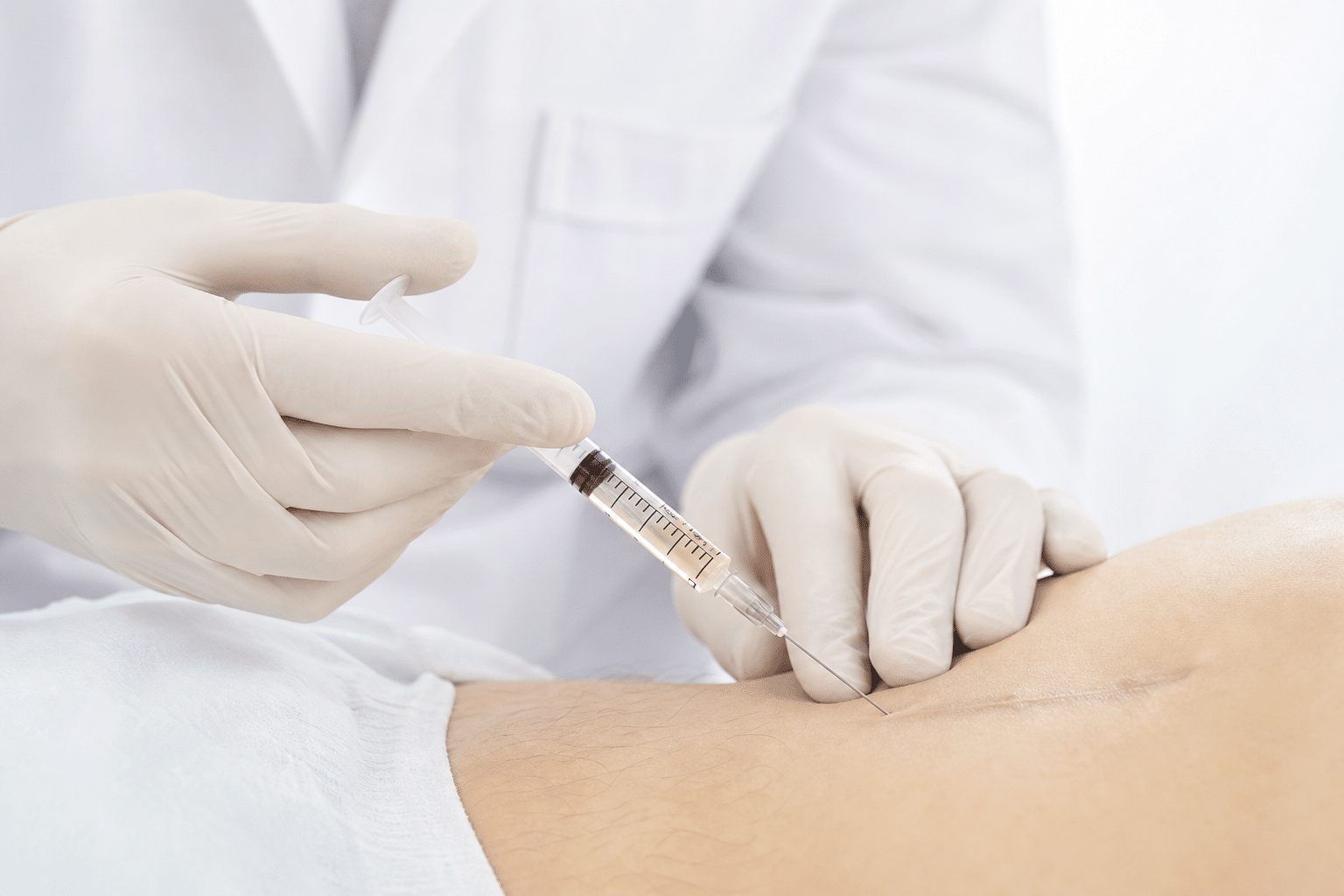
- A wait-and-see approach with compression Small, non-tender seromas that cause no symptoms can be treated conservatively. A tight-fitting compression dressing keeps the cavity closed and reduces fluid build-up. Many smaller seromas disappear in this way within four to eight weeks.
- Puncture (aspiration) Larger or symptomatic seromas are punctured using a needle and syringe to drain the fluid. This outpatient procedure must be repeated several times. The seroma may re-form until the tissue has healed and stabilised.
- Drainage or surgical treatment Persistent seromas that do not respond to aspiration require the insertion of a drain. In rare cases, further surgery is necessary — for example, if the seroma has developed fibrinous deposits or has become infected.
Experience has shown that surgeons employ various measures to prevent seroma formation. Sealing the wound surfaces with fibrin glue is regarded as a promising technique for minimising the dead space between the tissue and the skin flap. The insertion of Redon drainage tubes immediately after surgery is also an established procedure. Uncomplicated seromas respond to treatment within one to three months.
Important note
If swelling, warmth or increasing pain occurs in the area where the operation was carried out, you should consult your doctor or a specialist clinic immediately. Early treatment prevents further complications such as infections or necrosis.
Seroma formation and the financial consequences: what cover is available?
Seroma treatments following cosmetic procedures fall into a gap in cover that many patients underestimate. These include repeat visits to the doctor, punctures or inpatient drainage. Statutory health insurance does not cover follow-up treatment following cosmetic surgery that is not medically indicated, or covers it only partially. If emergency treatment is required, the health insurance provider may even reclaim the costs incurred.
This is exactly where a Consequential Costs Insurance It covers the gap in cover for complications such as seromas, wound healing disorders or infections resulting from the insured procedure. According to the 4beauty terms and conditions, this also includes punctures to drain exudates and wound revisions due to infections. The insurance cover applies to follow-up treatment up to 300,000 euros and can be taken out online up to 24 hours before the procedure — starting from a one-off payment of 35 euros for facelifts and liposuction procedures.

Anyone planning to have liposuction or a tummy tuck should take this into account before the operation. Insurance does not protect against the complication itself. However, it does ensure that you do not face any unexpected financial burdens arising from necessary follow-up treatment.
None
Frequently asked questions about seroma formation
Small seromas resolve on their own within four to eight weeks if treated conservatively with compression dressings. Larger seromas, which require aspiration, may take up to three months to resolve. In persistent cases requiring drainage or further surgical treatment, the healing process takes longer and varies greatly from person to person.
It is not possible to guarantee complete prevention, but the risk can be reduced. Proven preventive measures include the insertion of Redon drainage tubes immediately after the operation, as well as sealing the wound surfaces with fibrin glue to minimise the dead space between the skin flaps and the underlying tissue. Wearing compression garments during the healing phase further aids the fusion of the tissue layers.
Aspiration is indicated if the seroma is large, causes significant symptoms — a strong feeling of pressure, tightness or pain — or does not resolve despite compression therapy. The fluid should also be drained and examined if an infection is suspected. The decision is made by the treating doctor following a clinical assessment and, if necessary, an ultrasound scan.
Statutory health insurance does not cover the costs of treatment following cosmetic procedures that are not medically indicated. If emergency treatment is required, the health insurance fund may subsequently reclaim the costs incurred. Follow-up treatment insurance, taken out before the procedure, closes this gap in cover and covers medically necessary follow-up treatments such as punctures or wound debridement.
Abdominoplasties (tummy tucks) have the highest risk of seroma formation among cosmetic procedures, with an incidence rate of 5 % to 50 %. Mastectomies, extensive liposuction and body-contouring procedures are also frequently associated with seroma formation. The individual risk increases with the extent of the procedure and the presence of risk factors such as obesity or diabetes mellitus.
You might also be interested in this
-

Treatments
Risks and complications of a breast removal (mastectomy)
For many women, having a breast removed is one of the most life-changing decisions they will ever make. What are the medical risks and consequences of a mastectomy?
-

Treatments
Tummy Tuck: Everything You Need to Know at a Glance
A toned tummy, a new-found confidence – but which method is right for you, what does the recovery process involve, and what costs can you expect? All the key answers at a glance.
-

Risks & Complications
Buttock Augmentation: Risks and Complications – Your Comprehensive Guide to Making an Informed Decision
Many people dream of having a shapely bottom – but bottom augmentation is also a matter of safety. What risks and complications should you be aware of beforehand?
-

Treatments
Eyelid Lift: The Comprehensive Guide
Drooping eyelids can make your eyes look tired. Find out what treatment options are available, what aftercare involves, and what risks and costs you should bear in mind.
-

Preparation & Aftercare
Aftercare following cosmetic surgery: What really matters for healing and results after the procedure
Surgery is only the first step – aftercare determines the final outcome. Here’s what you absolutely must do correctly in the first few weeks.
-

Risks & Complications
Upper Arm Lift Risks and Complications: The Honest and Comprehensive Guide to Making a Safe Decision
Toned upper arms and greater confidence when wearing sleeveless clothes – but an upper arm lift is not a risk-free procedure. What complications should you be aware of beforehand?