Thrombosis and Embolism Following Cosmetic Surgery: Warning Signs, Prevention and Protection
Thrombosis and pulmonary embolism are among the most serious complications following cosmetic surgery. Find out what the warning signs are, how to prevent them effectively and how to protect yourself financially.

Thrombosis following cosmetic surgery:
A thrombosis following cosmetic surgery is a blood clot that forms — usually in the deep veins of the legs — when blood flows more slowly due to immobility or surgical procedures. If the clot travels to the lungs, it causes a pulmonary embolism. The most common triggers include prolonged surgery, general anaesthesia and restricted movement during the recovery period.
Table of Contents
Important note
This article is for information purposes only and is not a substitute for a medical diagnosis or advice. If you are unsure, or if you require a personalised treatment plan, it is essential that you consult a qualified specialist.
For many people, cosmetic surgery fulfils a long-cherished wish. However, every procedure carries risks for which neither you nor your doctor can be held responsible — thrombosis and embolism are among the most serious of these complications. If you are aware of them and understand them, you can take effective preventive measures and protect yourself in the event of an emergency.
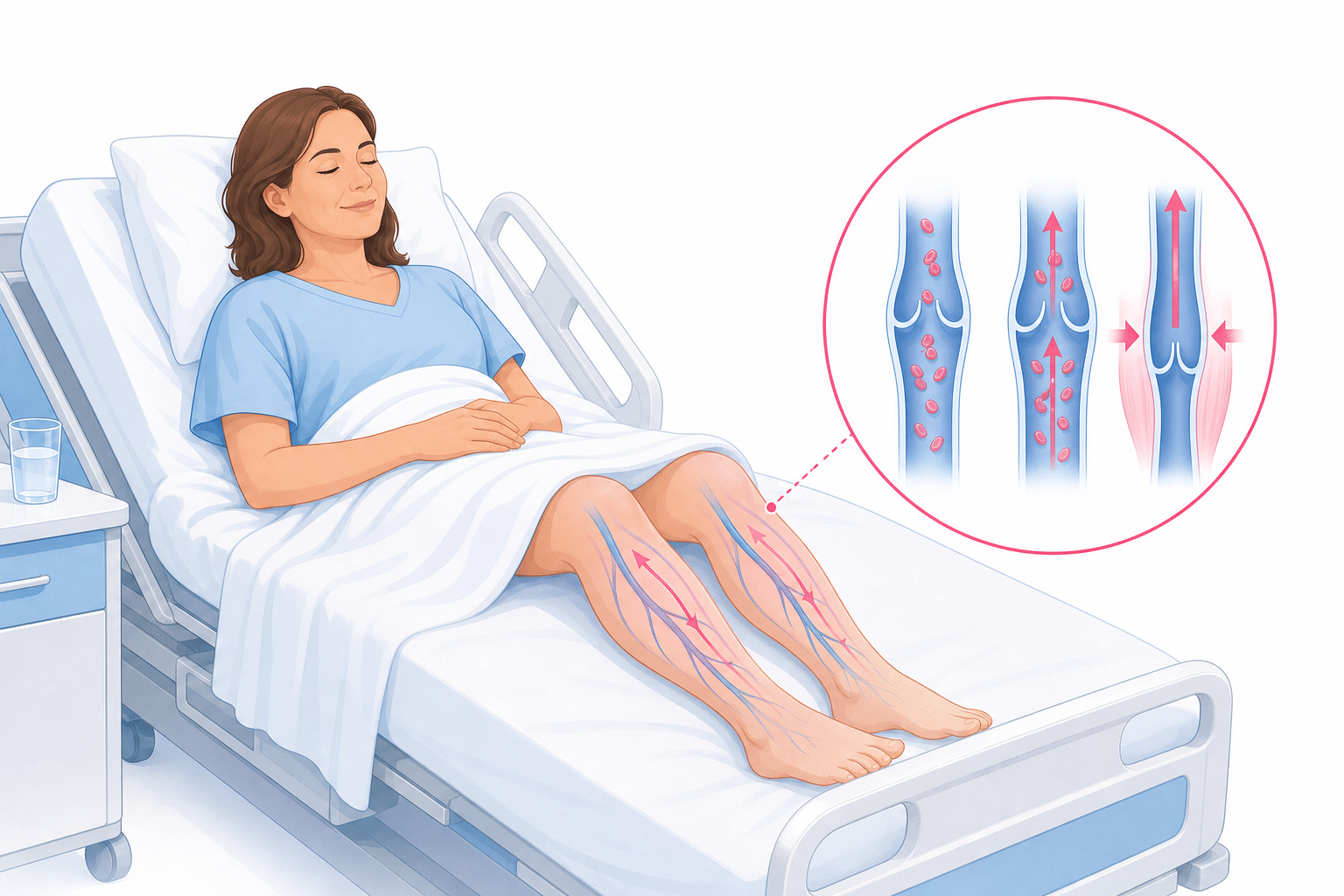
How do thrombosis and embolism occur following cosmetic procedures?
Key points at a glance
- Thrombosis is caused by slowed blood flow, changes in the vessel walls and an increased tendency to clot (Virchow’s triad).
- Longer operations under general anaesthesia, such as liposuction or a tummy tuck, significantly increase the risk of thrombosis.
- Smoking, being overweight, taking the contraceptive pill, pre-existing medical conditions and advanced age are considered to be aggravating risk factors.
- If a blood clot from a deep vein thrombosis (DVT) travels to the lungs, it causes a life-threatening pulmonary embolism.
The basis for post-operative thrombosis is described by what is known as Virchow’s triad. This medical term summarises three factors acting simultaneously: slowed blood flow due to immobility and anaesthesia, changes to the vessel wall caused by the surgical procedure, and an increased tendency to clot as a physical stress response. When all three factors occur together, the risk of venous thromboembolism (VTE) increases significantly.
How a pulmonary embolism develops following cosmetic surgery — from immobility to a medical emergency (as at July 2026).
In the context of cosmetic procedures, the duration of the operation plays a key role. According to an analysis of data from over 300 clinics (JAMA Surgery 2014), the risk of thrombosis increases measurably as the duration of the operation increases. Procedures such as a tummy tuck (abdominoplasty) or extensive liposuction are therefore among those associated with an increased post-operative risk of deep vein thrombosis (DVT).
Additional risk factors that may increase an individual’s risk of thrombosis include smoking, being severely overweight, hormonal contraceptives (the pill), a history of blood clotting disorders, and advanced age. Anyone with several of these factors should discuss their risk of thrombosis with their doctor before the procedure.

Recognising symptoms and effectively preventing them through preventive measures
Warning signs of thrombosis and embolism
Deep vein thrombosis (DVT) is characterised by swelling, pain, warmth and redness in one leg — often without any apparent external injury. Symptoms may still occur weeks after the procedure. According to the medical literature, the risk of thrombosis remains elevated for up to twelve weeks after surgery. It is at its highest during the first three weeks.
Experience shows that patients tend to underestimate this time frame. Anyone who suddenly notices a swollen leg or unexplained shortness of breath two weeks after cosmetic surgery should seek medical help immediately — even if the procedure appeared to have gone without a hitch.
DVT must be distinguished from superficial thrombophlebitis — an inflammation of the superficial veins accompanied by visible redness. DVT affects the deep veins of the leg and carries a significantly higher risk of pulmonary embolism. Signs of an embolism include sudden shortness of breath, chest pain and unexplained palpitations. If you experience these symptoms, call the emergency services on 112 immediately.
- Before the operation
- Tell your doctor about any pre-existing medical conditions, particularly any previous episodes of thrombosis or blood-clotting disorders.
- Please tell us about any medication you are taking — hormonal contraceptives increase the risk of thrombosis.
- Ideally, you should stop smoking at least four weeks before the procedure. Smoking constricts the blood vessels and increases the risk of blood clots.
- Discuss with your doctor whether medication to prevent thrombosis (e.g. heparin) is recommended.
- Make sure you have compression stockings in the correct size prescribed and have them ready on the day of your operation.
- After the operation
- Wear the prescribed compression stockings consistently — for several weeks after the procedure, as instructed by your doctor.
- Get up as soon as medically possible and walk short distances. Immobility is the main cause of thrombosis.
- Make sure you drink enough water. Staying well-hydrated keeps your blood thinner and reduces the risk of clotting.
- Make sure you take your prescribed anticoagulants as directed. Do not stop taking them without consulting your doctor.
- During the first twelve weeks, watch out for warning signs: swelling or pain in the leg, as well as shortness of breath or a racing heart, require immediate medical attention.
Thrombosis prevention: What is recommended
There are several measures available for effective prevention. Your doctor will determine the type and duration on a case-by-case basis:
| Measure | Effect | Date and time |
|---|---|---|
| Heparin / NOACs (new oral anticoagulants) | Anticoagulation, reduces blood clot formation | Immediately after surgery; possibly several weeks |
| Compression stockings | Improve venous blood flow in the veins of the legs | Commence during the operation and continue post-operatively |
| Early mobilisation | Activates the muscle pump and prevents blood pooling | As soon as medically possible after the operation |
| Giving up smoking before surgery | Improves blood flow, reduces the tendency to clot | Recommended at least six weeks before surgery |
Note
Your treating doctor will determine the specific thrombosis prevention measures — the type and duration of medication, and how long you should wear compression stockings — on an individual basis. This page is not a substitute for medical advice.
Financial protection should the thrombosis lead to complications
If thrombosis or an embolism occurs following cosmetic surgery, significant follow-up costs can quickly arise. Statutory health insurance does not cover the costs of treatment following cosmetic surgery — not even for medically necessary follow-up treatment resulting from the procedure. If you need to be admitted to hospital or undergo further surgery, you will have to cover these costs yourself.

The Consequential Costs Insurance 4beauty’s cover applies precisely in this situation. It covers the costs of medically necessary follow-up treatment and subsequent operations, including hospital stays. Depending on the policy, cover extends up to 300,000 euros; for cosmetic clinics, it is up to 10,000 euros. Particularly handy: you can take out the policy online up to 24 hours before the procedure.
In the event of complications, you retain the freedom to choose your own doctor. This cover is particularly worthwhile for procedures with an increased risk of thrombosis — such as liposuction or a tummy tuck. Find out more about premiums and the scope of cover in the frequently asked questions.
None
Frequently asked questions about thrombosis following cosmetic surgery
The risk of thrombosis remains elevated for up to twelve weeks after the procedure. It is at its highest during the first three weeks, as the body is still reacting to the stress of the operation and mobility may be restricted. Doctors therefore recommend thrombosis prophylaxis for several weeks.
Longer operations under general anaesthesia — in particular tummy tucks (abdominoplasty) and extensive liposuction — are considered to carry a comparatively higher risk of thrombosis. The duration of the operation is a decisive factor here: the longer the patient remains immobile under anaesthesia, the higher the risk of venous thromboembolism.
Statutory health insurance does not cover follow-up treatment following cosmetic procedures and may even seek reimbursement in the event of emergency treatment. Follow-up cost insurance, such as that offered by 4beauty, bridges this gap: it covers medically necessary follow-up treatment and protects you from high out-of-pocket costs — up to 300,000 euros in the event of reimbursement claims by the health insurance fund.
Yes. If a blood clot breaks away from a deep vein thrombosis (DVT) and travels via the bloodstream to the lungs, it causes a pulmonary embolism. Typical symptoms include sudden shortness of breath, chest pain and a racing heart. If you experience these symptoms, dial the emergency number 112 immediately.
Specific measures include: early mobilisation after surgery, the consistent wearing of compression stockings in accordance with the doctor’s instructions and, where recommended, the regular taking of anticoagulants (heparin or NOACs). The plastic surgery department recommends giving up smoking at least six weeks before the procedure, as nicotine increases the risk of blood clotting.
You might also be interested in this
-
Preparation & Aftercare
Aftercare following cosmetic surgery: What really matters for healing and results after the procedure
Surgery is only the first step – aftercare determines the final outcome. Here’s what you absolutely must do correctly in the first few weeks.
-

Treatments
Tummy Tuck: Everything You Need to Know at a Glance
A toned tummy, a new-found confidence – but which method is right for you, what does the recovery process involve, and what costs can you expect? All the key answers at a glance.
-

Risks & Complications
Buttock Augmentation: Risks and Complications – Your Comprehensive Guide to Making an Informed Decision
Many people dream of having a shapely bottom – but bottom augmentation is also a matter of safety. What risks and complications should you be aware of beforehand?
-

Treatments
Eyelid Lift: The Comprehensive Guide
Drooping eyelids can make your eyes look tired. Find out what treatment options are available, what aftercare involves, and what risks and costs you should bear in mind.
-
Risks & Complications
Upper Arm Lift Risks and Complications: The Honest and Comprehensive Guide to Making a Safe Decision
Toned upper arms and greater confidence when wearing sleeveless clothes – but an upper arm lift is not a risk-free procedure. What complications should you be aware of beforehand?
-

Risks & Complications
Risks of cheek augmentation: A comprehensive guide to your safety
Well-defined cheekbones are seen as a symbol of youth and attractiveness. But what are the risks associated with cheek augmentation – and what should you bear in mind beforehand?