Ring ligament division: Surgical treatment of trigger finger
Ring ligament division is a minor hand surgery procedure and the standard treatment for trigger finger, which causes painful restrictions in finger movement.
Table of Contents
Important note
This article is for information purposes only and is not a substitute for a medical diagnosis or advice. If you are unsure, or if you require a personalised treatment plan, it is essential that you consult a qualified specialist.
Ring ligament division is a common and highly effective minor procedure in the field of hand surgery. It is the standard treatment for a widespread condition known as „snapping finger“ or „trigger finger“, which causes painful locking of the finger during movement.
This article explains, in a clear and precise manner, what causes trigger finger, how a ring ligament release resolves this problem, and why this procedure is a prime example of the intricate expertise required in plastic and reconstructive surgery.
What is a ring-band cleavage?
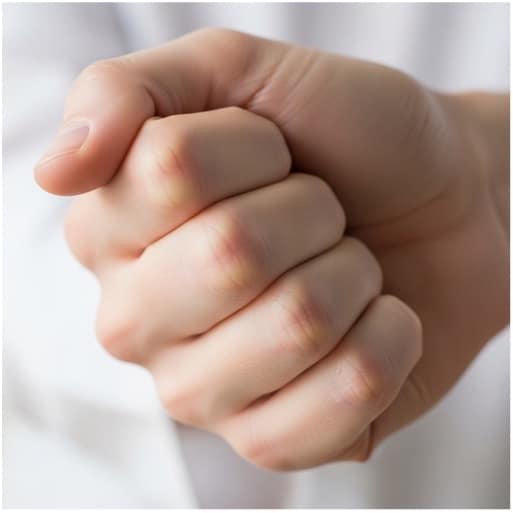
Ring ligament division is a surgical procedure used to treat trigger finger (stenosing tendovaginitis).
This involves the targeted sectioning of the A1 ligament, a tight band of connective tissue at the base of the finger on the palm side. This restores sufficient space for the flexor tendon running beneath it, allowing it to glide freely without obstruction.
The mechanical problem: Why a finger snaps
To understand the operation, one needs to be familiar with the underlying anatomy. The flexor tendons of our fingers run within a protective sheath (the tendon sheath) and are held in place against the bone by several annular ligaments, which prevent the tendon from lifting away.
In the case of a Trigger finger (stenosing tenosynovitis) a mechanical conflict arises:
In trigger finger (stenosing tenosynovitis), the A1 ring ligament and/or the tendon sheath thickens. This results in a mechanical constriction, often accompanied by a nodular thickening of the flexor tendon. The A1 ring ligament at the metacarpophalangeal joint also acts as a natural constriction. When the finger is bent, the tendon knot usually just manages to glide through; however, when the finger is straightened, it gets caught. It must then be „pulled through“ with some force, which causes the typical, often painful „snapping“ or jumping of the finger.
The operation: A simple solution to a mechanical problem
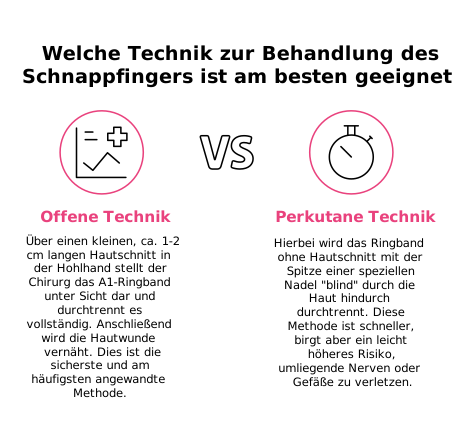
Ring ligament division resolves this conflict directly and effectively. This reconstructive hand surgery procedure is brief and, in uncomplicated cases, usually takes 10–20 minutes. It is generally carried out under local anaesthetic.
In both cases, the mechanical obstruction is removed. The tendon can glide freely again straight away, and the snapping mechanism is resolved.
Relevance to Plastic and Aesthetic Surgery
Hand surgery is one of the four cornerstones of training to become a „specialist in plastic and aesthetic surgery“ (plastic surgery, reconstructive surgery, hand surgery and burns surgery). Although the ring band release is a purely functional procedure, it demonstrates the core competencies that are essential for every plastic surgeon:
- In-depth knowledge of anatomy: a precise understanding of the course of the finest tendons, nerves and blood vessels within the tightest of spaces.
- Microsurgical precision: The ability to operate on delicate structures whilst minimising damage to the surrounding tissue.
These fundamental skills form the very foundation required to achieve safe and aesthetically excellent results in complex cosmetic surgery.
Risks and follow-up care
Ring band division is a procedure with very low risks. General surgical risks such as infections, impaired wound healing or nerve damage are rare.
- Follow-up treatment: The finger can and should be moved through its full range of motion immediately after the operation to prevent the tendon from sticking. A splint is not usually necessary, but may be used temporarily in exceptional cases to relieve pressure. Heavy strain should be avoided for approximately 2–3 weeks.
- Coverage of costs: As trigger finger is a medical condition, the cost of the operation is usually covered by both state and private health insurance.
Complications can also arise during medically necessary procedures. Follow-on costs insurance offers cover for cosmetic procedures where the financial risk of complications lies entirely with the patient.
Frequently Asked Questions (FAQ) on annular band splitting
Cortisone injections or splints can lead to a marked improvement or even long-term relief from symptoms in the early stages. However, in cases of chronic or recurrent symptoms, surgery is the safest and most lasting form of treatment.
For office-based work, the time off work is usually only a few days. For physically demanding or manual work, a sick note covering 2 to 3 weeks may be required.
No. The incision is very small and is made in one of the hand’s natural creases, so the scar is usually barely visible once it has healed.
A special compression vest must be worn for about a week. You should avoid sport and heavy physical work for 3–4 weeks. Mild swelling may persist for several weeks.