Cellulolysis: Treatment of cellulite using needles and electrical stimulation
Cellulolysis is a specialised method for treating cellulite and localised fat deposits using needles and electrical stimulation.
Table of Contents
Important note
This article is for information purposes only and is not a substitute for a medical diagnosis or advice. If you are unsure, or if you require a personalised treatment plan, it is essential that you consult a qualified specialist.
In the field of aesthetic body treatments, there are a multitude of terms that often cause confusion. One such specific technical term is the Cellulolysis. Unlike better-known procedures, he describes a very specific method for treating cellulite and localised fat deposits.
This glossary entry explains exactly what cellulipolysis is, how it works and how it differs from other, more common methods used today.
What is cellulipolysis?
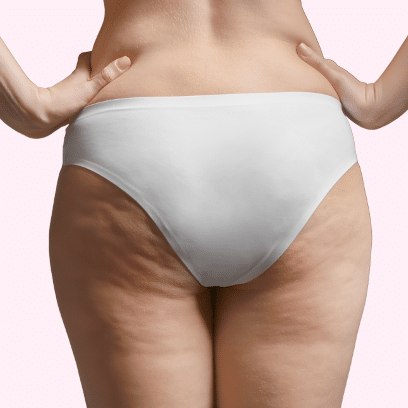
Cellulolysis is a minimally invasive cosmetic procedure for the treatment of cellulite (commonly known as ‘orange peel skin’) and localised fat deposits.
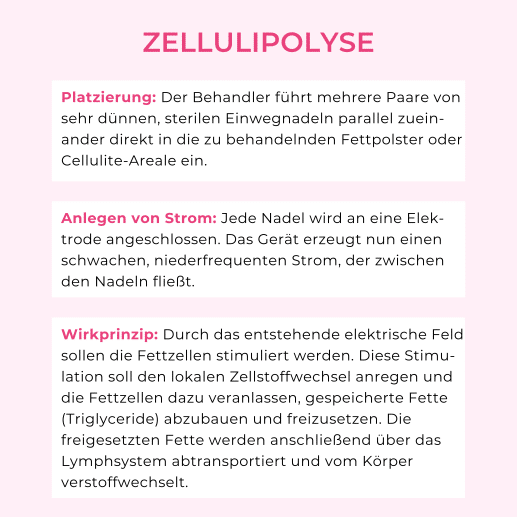
A key feature of the method is the use of very fine, long needles, which are inserted into the affected fatty tissue and connected to a device that delivers a weak electric current (stimulation current).
The resulting electric field is said to stimulate the fat cells to release fatty acids (lipolysis), thereby reducing their size.
How does cellulolysis work?
The procedure, which was developed in France, is based on the assumption that fat cells (adipocytes) respond to external electrical stimulation.
Typical treatment areas include the so-called „saddlebags“ on the thighs, the buttocks, the hips and the stomach.
The key distinction: Not to be confused with other methods
| Criterion | Cellulolysis | Injection lipolysis (fat-dissolving injections) | Cryolipolysis |
|---|---|---|---|
| Mechanism of action | Electrical stimulation | Chemical dissolution | Destruction caused by the cold |
| Method | Fine needles & stimulation current | Injection of an active substance (e.g. PPC) | Applicator with cooling plates |
| Main objective | Promoting fat loss | Destruction of the fat cell membrane | Apoptosis (programmed cell death) |
Realistic expectations: effectiveness and current significance
Cellulolysis is considered a gentle procedure. The results are generally less dramatic than those achieved with surgical liposuction. Several sessions (often 6–10), spaced a few weeks apart, are usually required to achieve visible results.
It is important to note that, whilst this is an established method, it is now, when compared with newer technologies such as cryolipolysis or more advanced injection therapies, a less common method . The scientific evidence for its effectiveness is less comprehensively documented than that for the more modern alternatives.
Risks and the importance of contacting the right organisation
Although the risks are considered to be low, this is an invasive procedure. Possible side effects include:
- Minor bruises (Haematomas) at the injection sites
- Mild swelling or redness
- A tingling sensation during the treatment
Choosing an experienced practitioner who adheres to impeccable hygiene standards is crucial to minimising risks. Should complications such as inflammation nevertheless arise, a Consequential Costs Insurance financial security for any follow-up medical treatment that may be required.
Frequently Asked Questions about Cellulipolyse
The insertion of the very thin needles is not usually felt to be painful. During the treatment, most patients feel a slight tingling sensation or a warming sensation caused by the electrical current.
No. Cellulolysis uses an electric current, whilst the fat-dissolving injection (injection lipolysis) uses a chemical agent that breaks down fat cells.
No. Like other body-contouring procedures, cellulolysis is not a method of weight loss. It is used to treat localised, stubborn deposits of fat and cellulite in people who are otherwise of normal weight.
The results can be long-lasting, but they are not permanent. A healthy lifestyle, including a balanced diet and exercise, is crucial to maintaining the results, as the remaining fat cells can fill up again if you put on weight.