Everything you need to know about forehead lifts: techniques, aftercare, costs and risks
Tired-looking eyes, drooping eyebrows, deep wrinkles? A forehead lift can visibly rejuvenate your appearance. Find out what methods are available and what you need to bear in mind regarding aftercare and costs.
As we get older, our skin loses its elasticity – wrinkles appear, the eyebrows droop and our facial expression often looks more tired or stern than we actually feel. A forehead lift – also known as a brow lift or upper facelift – can provide targeted relief in this regard. By lifting the forehead and eyebrows, the eyes are opened up, wrinkles are smoothed out and the whole face appears more alert, friendlier and rejuvenated.
This procedure is one of the tried-and-tested methods of surgical wrinkle treatment in plastic surgery and is chosen by both women and men who wish to achieve a fresh, natural appearance – without losing their distinctive facial features.
A brief explanation
A forehead lift tightens the skin on the forehead and, if necessary, can specifically relax the muscles responsible for frown lines or worry lines. The result is a harmonious, lively facial expression that often makes you look years younger.
Table of Contents
Important note
This article is for information purposes only and is not a substitute for a medical diagnosis or advice. If you are unsure, or if you require a personalised treatment plan, it is essential that you consult a qualified specialist.
Reasons for a forehead lift: When is the procedure advisable?
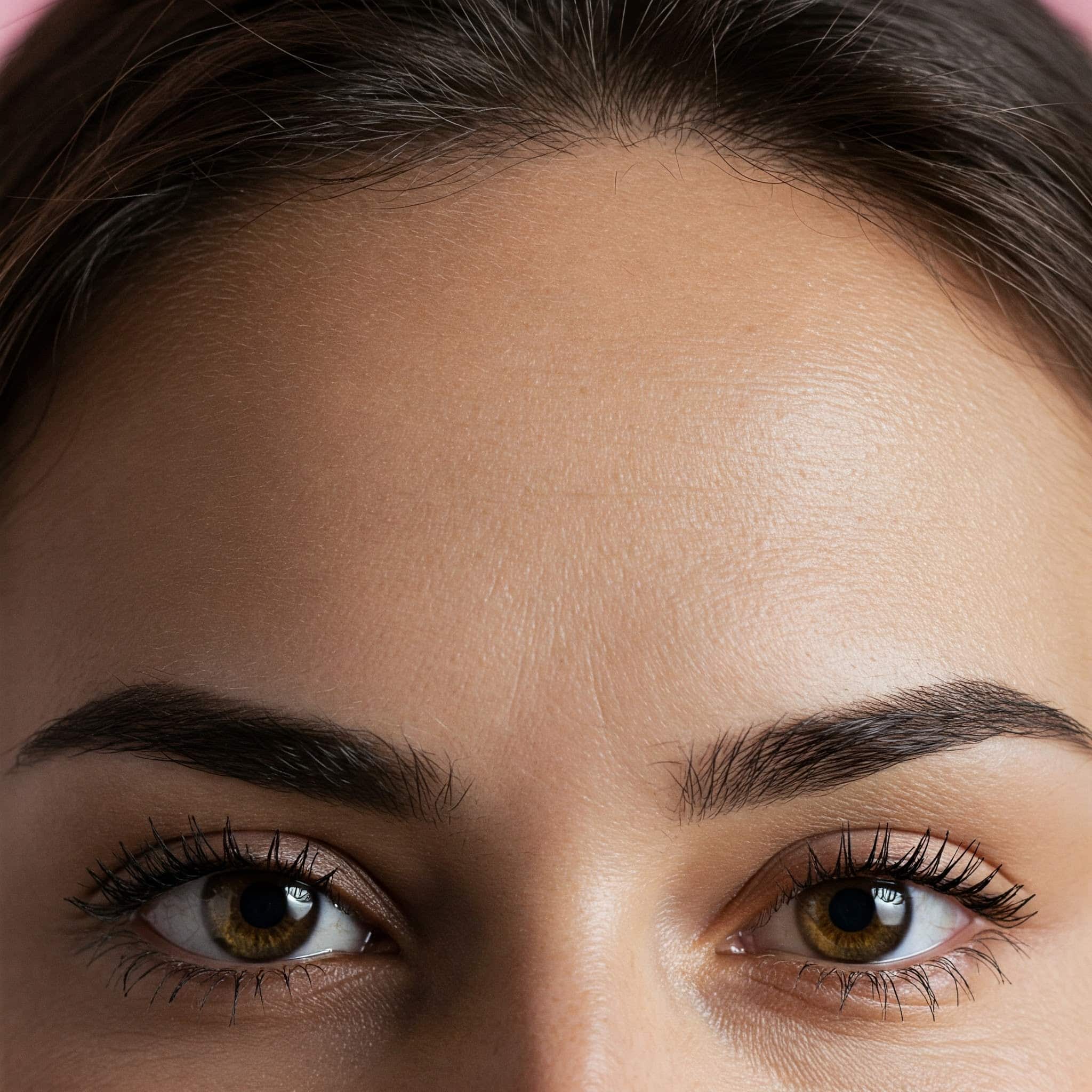
As we get older, or due to genetic factors, the upper part of the face can change: the skin and connective tissue lose their elasticity, wrinkles deepen and the eyebrows droop slightly. These changes can make facial expressions appear unintentionally tired, sad or stern.
A forehead lift can help here by restoring the natural harmony and openness of the eyes.
Common reasons for a forehead lift:
- Deep forehead wrinkles (worry lines) or Frown lines (glabellar lines) between the eyebrows
- Drooping or asymmetrical eyebrows (brow ptosis), which mar the view
- Sagging forehead skin due to a loss of elasticity
- A tired or grim expression, which does not correspond to one’s inner feelings
- Inadequate efficacy of minimally invasive methods, e.g. Botox or fillers
- Functional limitations, for example in the case of drooping eyebrows that affect the field of vision
Who is a forehead lift suitable for?
A forehead lift is ideal for patients who:,
- who would like a fresher, more open look,
- where non-invasive treatments are no longer sufficient,
- or who wish to correct age-related sagging of the skin in the upper face.
A forehead lift not only improves one’s outward appearance, but can also boost self-confidence and overall well-being. Many patients report that, following the procedure, they feel once again the way they see themselves on the inside – vibrant, open and full of energy.
Preparing for a forehead lift: Go into the procedure well-informed, confident and relaxed
A successful forehead lift begins long before the actual procedure: with careful preparation, an honest consultation and realistic expectations. The aim is to strike the perfect balance between medical safety, aesthetic sensitivity and your personal well-being.
The personal consultation
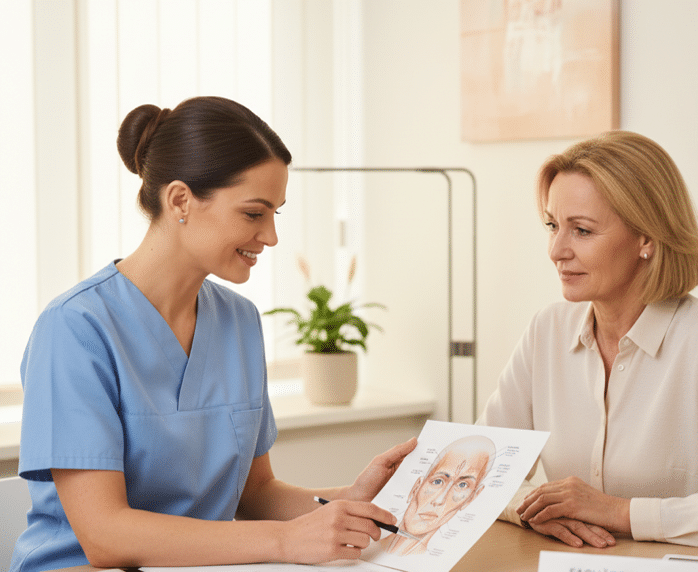
The first step is a detailed consultation with an experienced specialist in plastic and aesthetic surgery. During this consultation, your facial proportions, skin quality, facial expressions and individual wishes will be analysed in detail. The doctor will explain the various techniques (e.g. endoscopic or traditional forehead lift), illustrate the possible results and address your questions – from the type of anaesthesia to the healing process.
Purpose of the consultation: A realistic, transparent understanding of,
- which technique is most suitable,
- what results can be achieved,
- and how you can prepare as effectively as possible.
Important steps to take before the operation
Good preparation minimises risks and promotes a speedy recovery. Here is an overview of the key points:
| Preparatory step | Recommendation / Note |
|---|---|
| Medical history | Disclosure of all relevant pre-existing conditions, allergies and medication (particularly blood-thinning medication). |
| Medication break | Do not take any blood-thinning medication (e.g. aspirin, vitamin E, fish oil, rheumatism medication) for 2 weeks prior to the procedure. |
| Smoking & Alcohol | Avoid nicotine and alcohol for at least 1–2 weeks before the operation – they impair blood circulation and wound healing. |
| State of health | The operation should only go ahead if you feel well. If you have a cold or an infection, please reschedule your appointment. |
| Hair care | Shaving is usually not necessary – the hair in the area to be operated on is left untouched. |
| Organisation | Plan a short break from work and sport (approx. 1–2 weeks) and, if necessary, arrange for someone to collect you after the procedure. |
Preparing for anaesthesia
Depending on the surgical technique, a forehead lift can be carried out under local anaesthetic, twilight sedation or general anaesthetic. Your doctor will discuss the most suitable option with you. On the day before the operation, you should opt for light meals and, if you are having a general anaesthetic, you must not eat or drink anything after midnight.
Tip
Make a note in advance of all the questions that are important to you – such as those relating to anaesthesia, scars, costs or aftercare. That way, you’ll be able to approach your treatment day feeling relaxed and confident.
Security that builds trust – our recommendation: cover for when the worst happens
Although a forehead lift is now considered very safe, it is a medical procedure – and therefore never entirely risk-free. To ensure you can go ahead with your treatment feeling completely at ease, we recommend a cosmetic Consequential Costs Insurance. This cover applies in the event of unforeseen complications, follow-up corrections or medically necessary further procedures.
Benefits at a glance:
- Financial security in the event of complications or follow-up operations
- Focus entirely on your recovery rather than on potential costs
- Peace of mind – from preparation to the final result
A sense of security gives you the freedom to focus on what really matters: Her delight at her new, more youthful appearance.

The procedure – step by step
A forehead lift follows a clearly structured procedure that ensures safety and precision:
- Anaesthesia & Preparation Depending on the method used, the procedure is carried out under local anaesthesia with twilight sedation or under general anaesthesia. The surgical site is marked and disinfected before the anaesthesia is administered.
- Skin and tissue preparation Through small, carefully placed incisions, the skin, subcutaneous tissue and muscles of the forehead are released, reshaped and – if necessary – excess tissue is removed.
- Lifting & Firming The skin is gently repositioned upwards and secured in its new position, usually with absorbable sutures or small anchors.
- Wound closure & dressings The incisions are carefully sutured, after which a light head dressing is applied to protect the treated area.
Duration and stay
- Duration: Depending on the method used, a forehead lift takes around 1 to 2 hours; combined procedures (e.g. a facelift or eyelid lift) take slightly longer.
- Length of stay: Usually carried out as an outpatient procedure, though in some cases it may require 1–2 days’ inpatient observation.
An overview of forehead lift techniques
Each method has its own specific advantages – the choice depends on individual circumstances and preferences.
| Method | Description | Advantages | Recommended for |
|---|---|---|---|
| Endoscopic forehead lift | A minimally invasive technique involving 3–6 small incisions (1–2 cm) in the scalp. Using an endoscope, the skin and muscles of the forehead are released and the eyebrows are repositioned. | Barely visible scars, rapid healing, natural-looking results | Early to moderate signs of ageing |
| Classic / Open Forehead Lift | A longer incision is made along or behind the hairline. Excess skin and tissue are removed, and the forehead and eyebrows are comprehensively lifted. | Greater firming effect, long-lasting results (10 years+) | Significantly sagging skin, pronounced wrinkles |
| Pre-temporal forehead lift | A cut along the hairline, ideal for making the forehead appear shorter. | Correction of a high forehead, precise contours | High hairline |
| Coronal forehead lift | The incision is made approximately 4 cm behind the hairline; the scar is completely concealed by the hair. | Invisible scar, natural-looking result | Thick hairline |
| Temporary brow lift (temporal lift) | Small incisions in the temple area to lift the outer part of the eyebrow. | Minimal scarring, precise eye opening | Drooping outer eyebrows |
| Instant brow lift | Removal of a skin tag just above the eyebrow. | Precise correction of shape and position | Local asymmetry of the brow |
| Internal browpexy | Elevation of the eyebrow from the inside, combined with an upper eyelid lift. | No additional incision, short procedure | Slight drooping of the brow; eyelid correction planned |
Technical details: Modern, precise, gentle on the grain
- Fixation techniques: absorbable sutures, microplates or drill-hole anchors in the skull bone
- Instruments: Sophisticated endoscopic systems enable precision down to the millimetre
- Skin sutures: microscopic, often self-dissolving sutures for inconspicuous scarring
Good to know
With an endoscopic forehead lift, hair grows back directly over the small scars – the marks are practically invisible after just a few weeks.
Combination with other treatments
A forehead lift can be ideally combined with other cosmetic procedures to achieve a harmonious overall appearance, such as:
- Upper eyelid lift (blepharoplasty) – for an open, fresh perspective
- Facelift – to smooth the lower part of the face
- Botulinum toxin (Botox) or hyaluronic acid fillers – for the targeted treatment of fine expression lines
- Laser treatments or microneedling – to improve the skin’s texture
- Autologous fat grafting – for natural volume
Tip
By combining several techniques, it is often possible to achieve a particularly harmonious and long-lasting overall result.
Possible complications and risks of a forehead lift
A forehead lift is considered a safe procedure when performed by an experienced specialist in plastic and aesthetic surgery. Nevertheless – as with any operation – risks and complications can arise. Open and honest communication is therefore essential to set realistic expectations and build trust.
General surgical risks
General surgical risks include:
- Swelling and bruising: usually temporary; they subside within 1–2 weeks
- Infections or impaired wound healing: very rare; can be prevented by practising good hygiene
- Post-operative bleeding: particularly in the first few hours after the procedure
- Risk of thrombosis: low, particularly if there is sufficient exercise after the operation
| Possible complications | Frequency | Recommended measures / Prevention |
|---|---|---|
| Swelling / Bruising | Frequent, temporary | Cooling, keeping the head elevated |
| Post-operative bleeding | Rare | Bandage, medical check-up |
| Infection | Very rare | Antibiotic prophylaxis, sterile aftercare |
| Impaired wound healing | Rare | Giving up smoking, good skincare |
| Numbness | Common (temporary) | Recovery taking weeks to months |
Specific risks associated with a forehead lift
As well as general risks, a forehead lift may also give rise to specific complications, which depend on the extent of the procedure and the method used.
Possible specific risks:
- Temporary numbness or sensory disturbances on the forehead or scalp
- Asymmetries the eyebrows or the contour of the forehead (usually temporarily due to swelling)
- Hair loss at the incision line (particularly with open methods, usually temporary)
- Scarring or changes in skin pigmentation, depending on skin type and wound healing
- Over-correction or under-correction (rare; may need to be corrected)
Note
Modern endoscopic techniques minimise many of these risks, as they involve tiny incisions and the use of delicate instruments.
Risk factors that influence the healing process
Certain factors may increase the risk of complications or delay wound healing:
- Smoking or regular nicotine use
- Chronic conditions (e.g. diabetes, cardiovascular diseases)
- Taking blood-thinning medication
- Strong sunlight during the healing phase
- Inadequate aftercare or stress during the first few days
Tip
Careful preparation and aftercare, tailored to your individual needs, play a crucial role in ensuring a complication-free recovery.
Coverage in the event of complications – for peace of mind before your operation
Despite taking the utmost care, complications can never be completely ruled out. In such cases, it can be reassuring to have financial protection. With a Consequential Costs Insurance – as offered by 4beauty – you are covered even if unexpected follow-up treatments or corrective procedures become necessary.
Our aim:
We want you to be able to look forward to your beauty treatment with confidence and peace of mind. Our insurance protects you from high additional costs, so that you can focus entirely on what matters most – your recovery and your wellbeing.

Aftercare and the healing process – How to help ensure the best possible result from a forehead lift
Aftercare following a forehead lift is crucial for achieving a natural, long-lasting result. It helps to minimise swelling and bruising, promote scar healing and reduce risks.
Immediately after the operation (days 1–7)
- Headband / Forehead band: A soft bandage is usually worn for 1–2 days to stabilise the forehead and reduce swelling.
- Swelling and bruising: These are normal and may extend down to the lower eyelids. Applying a cold compress (not directly on the skin) and keeping the head elevated will help them subside more quickly.
- Pain / feelings of tension: Mild pain is normal and can be effectively treated with the prescribed medication.
- Preservation: Avoid pressure, rubbing or exaggerated facial expressions; light everyday activities can be resumed after a few days.
Tip
You must avoid nicotine, alcohol and blood-thinning medication at all costs.
Stylish & socially acceptable
- Stitches or staples are usually removed after 5–10 days (this step is not necessary for resorbable materials).
- Social skills: Most visible signs are significantly reduced after 1–2 weeks, and it is often possible to return to office work after just 5–7 days.
Sport & physical activities
- Light physical activities: permitted again after about 2 weeks
- Intense exercise / heavy lifting: Take a break for 4–6 weeks
- Sun protection: Avoid direct sunlight, sunbeds and saunas; UV protection (SPF 50) is recommended for at least 3 months or until the scars have faded
Long-term recovery process (2 weeks – 6 months)
- Swelling and bruising tend to subside largely after 2–3 weeks
- Scars: Most scars are well concealed by the hair; regular aftercare (silicone gels, gentle massage) aids healing
- Final result: The results are usually visible after 3–6 months and can remain stable for 5–10 years or longer
- Review appointments: Regular follow-up appointments with the surgeon are important for monitoring the healing process
Dos and Don’ts
- Do’s: Keep your head elevated, apply cold compresses, take your medication as prescribed, and attend your follow-up appointments
- Things not to do: Applying pressure to the forehead, taking up sport too soon, direct sunlight, smoking, blood-thinning medication
Costs, funding & cover: For a stress-free surgical experience
A forehead lift is a bespoke cosmetic procedure, the cost of which depends on a number of factors. Transparent information helps to avoid any financial surprises and ensures you can enjoy the treatment with complete peace of mind.
| Cost factor | |
|---|---|
| Surgical technique | Endoscopic vs. open forehead lift |
| Scope / Complexity | In combination with upper eyelid lift, facelift, Botox/fillers, laser treatment, etc. |
| Anaesthesia | Local anaesthesia, twilight sleep, general anaesthesia |
| Hospital stay | Outpatient treatment or a 1–2-day stay in hospital |
| Fixation materials & post-treatment procedures | Resorbable anchors, sutures, controls |
Typical budget
Approx. €3,000–5,700 for standard treatments; for complex combinations, the price can be as high as €16,800.
Note: As this is a cosmetic procedure, health insurance funds do not usually cover the costs not the costs. Exceptions apply where medically necessary (e.g. significant restriction of the field of vision).
Funding options
Many clinics offer flexible payment plans, allowing you to finance your treatment in a way that suits you. A consultation in advance can help clarify which options are available to you.
Our liability insurance: Feel secure, operate with peace of mind
As well as specialist medical care, it is important to us that you feel safe and well looked after throughout your entire treatment journey. Our specialised insurance is there to support you:
- Coverage in the event of follow-up operations or complications
- A measured approach: You can focus entirely on the healing process and your new appearance
- Professional support: We are here to offer you advice, even if we are not directly involved in your treatment

Tip
Insurance covering follow-up costs gives you the peace of mind you need to enjoy the procedure without any worries and to be covered should the worst happen. Here Find out more!
FAQ – Frequently asked questions about forehead lifts (facelifts)
The results are usually long-lasting. The first changes become visible after 1–2 weeks, and the final result is apparent after 3–6 months. The effects can last for 5–10 years or longer, but gradually diminish as the skin ages naturally.
You will not feel any pain during the operation thanks to the anaesthesia (local anaesthesia, twilight sleep or general anaesthesia). In the first few days after the operation, you may experience a feeling of tightness, mild pain or swelling, but these can be effectively managed with medication.
With minimally invasive endoscopic techniques, the incisions are very small and well concealed within the hairline. Traditional open procedures leave longer scars along or within the hairline, which usually heal without being noticeable. Scar care (silicone gel, massage) supports the healing process.
Most patients are able to resume normal social activities after 7–14 days. Light office work is often possible after 5–7 days. Sport and physically strenuous activities should be avoided for 4–6 weeks.
As with any surgical procedure, there are general surgical risks such as infections, bruising, haematomas, impaired wound healing or anaesthetic risks. Specific risks include temporary sensory disturbances, rare cases of nerve damage, asymmetrical results, temporary hair growth disturbances or visible scars.
Yes, it is often combined with:
- Upper eyelid lift (blepharoplasty)
- Facelift / Facial lift
- Botox or hyaluronic acid fillers
- Skin-tightening treatments such as laser treatments, microneedling or chemical peels
- Autologous fat grafting
- Neck lift
The costs vary depending on the method, the extent of the procedure, the type of anaesthesia and the length of stay in hospital. They typically range from €3,000 to €5,700. However, complex combination procedures can be considerably more expensive. Health insurance providers do not usually cover the costs, unless the procedure is medically necessary.
Please note the Title: „Specialist in Plastic and Aesthetic Surgery“, membership of recognised professional bodies (e.g. DGÄPC), a transparent breakdown of costs, certified operating theatres and a comprehensive aftercare programme.
You might also be interested in this
-

Treatments
Tummy Tuck: Everything You Need to Know at a Glance
A toned tummy, a new-found confidence – but which method is right for you, what does the recovery process involve, and what costs can you expect? All the key answers at a glance.
-

Treatments
Neck lift using autologous fat: Everything you need to know about techniques, aftercare, risks and costs
The neck is often the first place to show signs of ageing. Rather than removing skin, a neck lift uses the patient’s own fat to specifically restore lost volume – a gentler alternative to a neck lift?
-

Treatments
Eyelid Lift: The Comprehensive Guide
Drooping eyelids can make your eyes look tired. Find out what treatment options are available, what aftercare involves, and what risks and costs you should bear in mind.
-
Preparation & Aftercare
Aftercare following cosmetic surgery: What really matters for healing and results after the procedure
Surgery is only the first step – aftercare determines the final outcome. Here’s what you absolutely must do correctly in the first few weeks.
-

Risks & Complications
Risks of cheek augmentation: A comprehensive guide to your safety
Well-defined cheekbones are seen as a symbol of youth and attractiveness. But what are the risks associated with cheek augmentation – and what should you bear in mind beforehand?
-

Risks & Complications
Upper Arm Lift Risks and Complications: The Honest and Comprehensive Guide to Making a Safe Decision
Toned upper arms and greater confidence when wearing sleeveless clothes – but an upper arm lift is not a risk-free procedure. What complications should you be aware of beforehand?