antibiotic
Antibiotics are usually used during operations, including cosmetic procedures, not to treat infections but to prevent them.
Antibiotics are among the most important discoveries in modern medicine. In the context of surgical procedures, including cosmetic surgery, they play a crucial role in patient safety, even in the absence of infection. In most cases, they are used here not for treatment but for prevention.
This article explains, in a clear and concise manner, what antibiotics are, how they work and why they are an essential part of many surgical procedures.
Table of Contents
Important note
This article is for information purposes only and is not a substitute for a medical diagnosis or advice. If you are unsure, or if you require a personalised treatment plan, it is essential that you consult a qualified specialist.
What is an antibiotic?
An antibiotic is a medicine that specifically targets Bacteria It acts by either killing bacteria (bactericidal effect) or inhibiting their growth (bacteriostatic effect), thereby enabling the body’s own immune system to fight off the infection.
Please note: Antibiotics are effective against bacteria, but not against viruses, fungi or parasites.
The key application in surgery: antibiotic prophylaxis
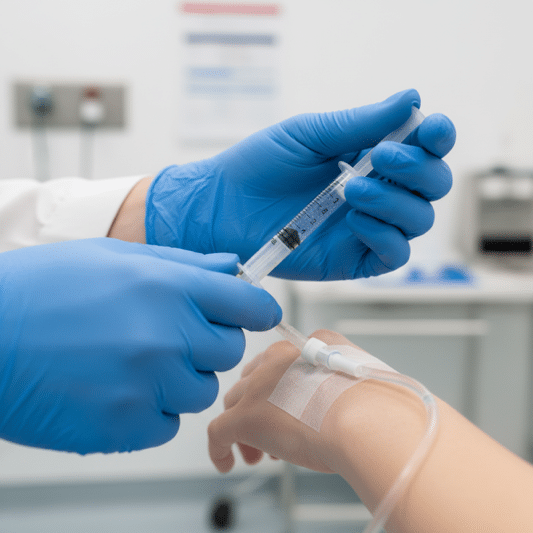
If you are given an antibiotic as part of cosmetic surgery, this is usually not because you are ill, but as a preventative measure. This procedure is known as perioperative antibiotic prophylaxis (PAP).
Objective: The aim is to prevent a post-operative wound infection. During any surgical procedure, the skin’s natural protective barrier is compromised. This allows bacteria from the skin’s surface or from the surrounding environment to enter the wound.
Date: Prophylaxis is most effective when there is already a sufficient concentration of the antibiotic in the tissue at the time of the skin incision. For this reason, the antibiotic is usually administered intravenously as a single dose approximately 30 to 60 minutes before the start of the operation.
Duration: For most routine procedures in cosmetic surgery, this single dose is sufficient. Only in the case of certain high-risk procedures or specific patient groups is a longer course of antibiotics recommended, as an exception.
Perioperative antibiotic prophylaxis is now an established standard for many surgical procedures, particularly those with an increased risk of infection.
Correct use and the risk of resistance
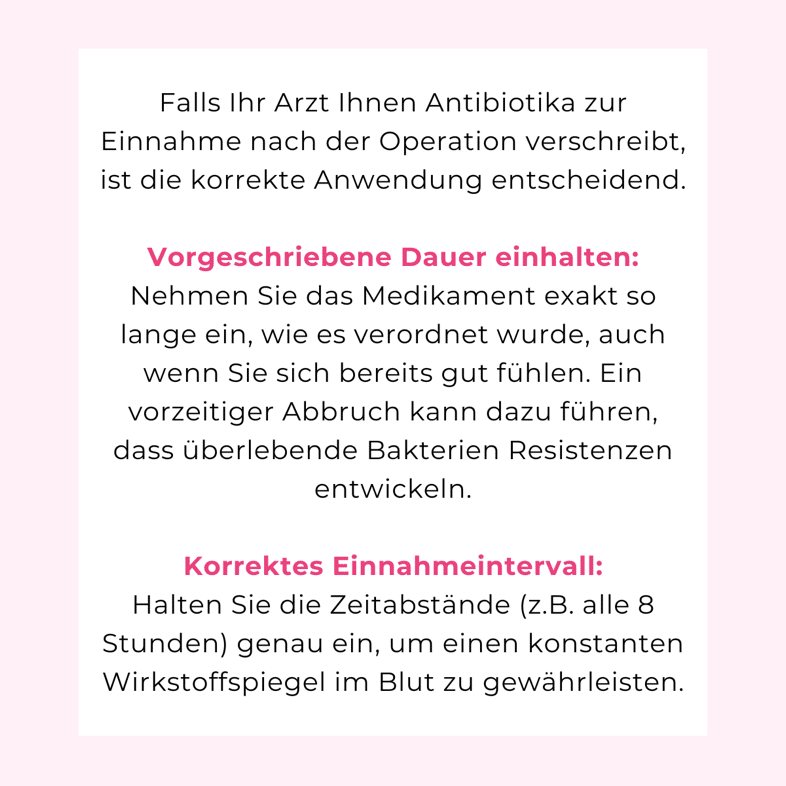
Antibiotic resistance means that bacteria become resistant to the effects of an antibiotic. This is one of the greatest global health threats. The responsible and targeted use of antibiotics – that is, only when they are truly necessary – is crucial to preserving the effectiveness of these vital medicines for the future.
Risks and side effects of antibiotics
Although antibiotics are generally well tolerated, side effects may occur. The most common are gastrointestinal symptoms, as the medicines can also affect the beneficial bacteria in the gut flora. Allergic reactions are also possible. Please inform your doctor of any known allergies before the operation.
The administration of an antibiotic forms part of the comprehensive safety protocol for surgery. Nevertheless, complications such as wound infections can never be 100 % ruled out.
One Consequential Costs Insurance is designed to provide cover against the financial consequences of complications arising from cosmetic surgery.
Frequently Asked Questions (FAQ) about antibiotics during surgery
You are being given this as a preventative measure. It is intended to prevent, from the outset, any wound infection caused by bacteria that might enter the wound during the operation.
No. The flu and most colds are caused by viruses. Antibiotics are completely ineffective against viruses.
Yes, definitely. If you stop taking the medication before the course is complete, the most resilient bacteria may survive and develop resistance, which will make future treatments more difficult.
It is generally not recommended. Alcohol can interfere with the effectiveness of some antibiotics or increase their side effects (e.g. on the stomach). If in doubt, ask your doctor or pharmacist.