Cellulite (orange peel skin)
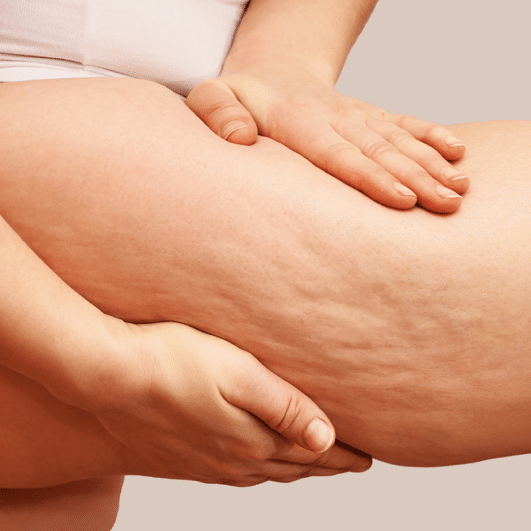
Cellulite, commonly known as ‘orange peel skin’, is a purely cosmetic skin condition characterised by dimples on the thighs, buttocks and hips, and affects up to 90 % of all women.
Table of Contents
Important note
This article is for information purposes only and is not a substitute for a medical diagnosis or advice. If you are unsure, or if you require a personalised treatment plan, it is essential that you consult a qualified specialist.
Cellulite, colloquially also known as Cellulite is a purely cosmetic skin condition that affects up to 90 % of all women to varying degrees. The characteristic dimples on the thighs, buttocks and hips are the subject of countless myths and product claims. But what is cellulite really, and what can modern medicine actually do about it?
What is cellulite?
Cellulite is a hereditary, non-inflammatory change in the structure of the skin caused by subcutaneous fatty tissue, which results in a dimpled or wavy appearance of the skin.
It is caused by the interaction of three main factors: the specific structure of female connective tissue, the underlying fat cells and hormonal influences.
Cellulite is not a disease and can occur regardless of body weight
It is crucial to understand that cellulite is not a sign of illness, poor fitness or being overweight. It is a natural characteristic of the female body, which can also affect very slim and fit women.
The anatomical cause: Why does it mainly affect women?
The reason why men very rarely develop cellulite lies in the different structure of their skin:
- For women: The connective tissue strands (septum) that connect the skin to the underlying muscles run for the most part vertical. Between them lie relatively large fat cell compartments. When these fat cells increase in volume or the lymphatic flow is disrupted, they push upwards against the thinner female epidermis. At the same time, the rigid connective tissue strands pull the skin downwards. This results in the characteristic dimples.
- For men: The connective tissue strands are more densely and cross-linked. The fat cell compartments are smaller and the outer layer is thicker. This sturdy network prevents the fat cells from pushing their way upwards.
The stages of cellulite
The severity is often classified into three grades:
- Grade 1: The dimples are only visible when performing the „pinch test“ (pinching the skin together).
- Grade 2: The dents are visible when standing, but not when lying down.
- Grade 3: The dents are clearly visible both when standing and when lying down.
Treatment methods: What really works? A realistic overview
The top priority is managing expectations realistically: No method can remove cellulite completely and permanently. Reputable treatments aim to achieve a significant and visible Improvement depends on the condition of the skin.
1. Basic conservative measures
A healthy lifestyle can improve the appearance of cellulite, but it cannot eliminate its cause:
Sport & Muscle Building:
Strong muscles beneath the fatty tissue firm up the whole area.
A healthy diet and drinking enough fluids:
They support a healthy metabolism and firm connective tissue.
Massages & Lymphatic Drainage:
They can temporarily reduce water retention and smooth the skin’s appearance in the short term.
What about creams?
Anti-cellulite creams can nourish the skin and temporarily firm it up thanks to ingredients such as caffeine. However, they cannot alter the structural causes deep within the tissue.
2. Professional medical procedures
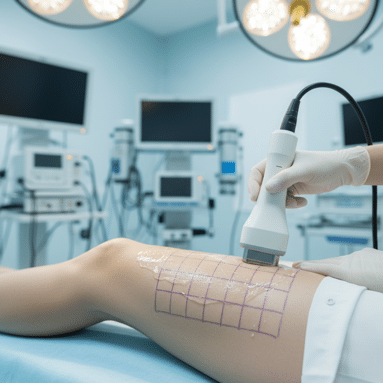
These methods are carried out by doctors and address the anatomical causes:
| Method | Mechanism of action | Objective |
|---|---|---|
| Acoustic Wave Therapy (AWT) | Acoustic waves are directed into the tissue to stimulate metabolism and collagen production | Improvement in skin elasticity and texture |
| Radiofrequency therapy | Controlled heating of the deep tissue layers to stimulate new collagen formation | Toning of the connective tissue |
| Cellfina® (subcision) | A minimally invasive procedure in which the shortened strands of connective tissue that cause the dimples are precisely severed | Long-term smoothing of deep, isolated dents |
| Laser therapy (e.g. Cellulaze®) | A laser fibre is inserted under the skin to sever the strands of connective tissue and stimulate collagen production through heat | A combination of smoothing and firming |
Risks and the importance of insurance cover
Minimally invasive treatments for cellulite reduction, such as Cellfina® or Cellulaze®, are minor surgical procedures. Possible risks include:
- Bruises
- Swelling
- Pain
- Pigment changes or
- an unsatisfactory result.
As these are cosmetic treatments, the costs of treating any complications not covered by health insurance. One Consequential Costs Insurance However, it can provide financial security in the event that medically necessary follow-up treatment is required after your treatment.

Frequently Asked Questions (FAQ) about cellulite
No. As it is a genetic predisposition, no treatment can „cure“ cellulite permanently. However, professional treatments can achieve a long-lasting and noticeable improvement in the appearance of the skin.
No. A traditional Liposuction Liposuction removes deep fat tissue, not the superficial fat cells that are responsible for the dimples. It can actually make the appearance of cellulite worse, as the skin loses its elasticity.
Treatment is advisable when the level of personal distress is high. Many of the professional approaches are suitable for adult women of all ages.
This depends on the individual findings. Where there are many deep, clearly defined dimples, subcision (e.g. Cellfina®) is considered one of the most effective methods, offering long-lasting results. Where the skin has a more undulating appearance, radiofrequency or shockwave therapies are often a good choice.