Chemical peel
Chemical peels use carefully selected acids to exfoliate the skin in a controlled manner and stimulate regeneration – one of the oldest methods in aesthetic dermatology.
Table of Contents
Important note
This article is for information purposes only and is not a substitute for a medical diagnosis or advice. If you are unsure, or if you require a personalised treatment plan, it is essential that you consult a qualified specialist.
The desire for flawless, rejuvenated skin leads many people to seek treatment in aesthetic dermatology. One of the oldest and, at the same time, most effective methods for significantly improving the appearance of the skin is chemical peeling. This procedure uses carefully selected acids to exfoliate the skin in a controlled manner and stimulate regeneration.
However, not all chemical peels are the same. There are enormous differences in how they work, their intensity and the associated risks. This article explains the different types of chemical peels and provides you with the information you need to weigh up the benefits and risks of this intensive treatment safely.
Definition: What is a chemical peel?
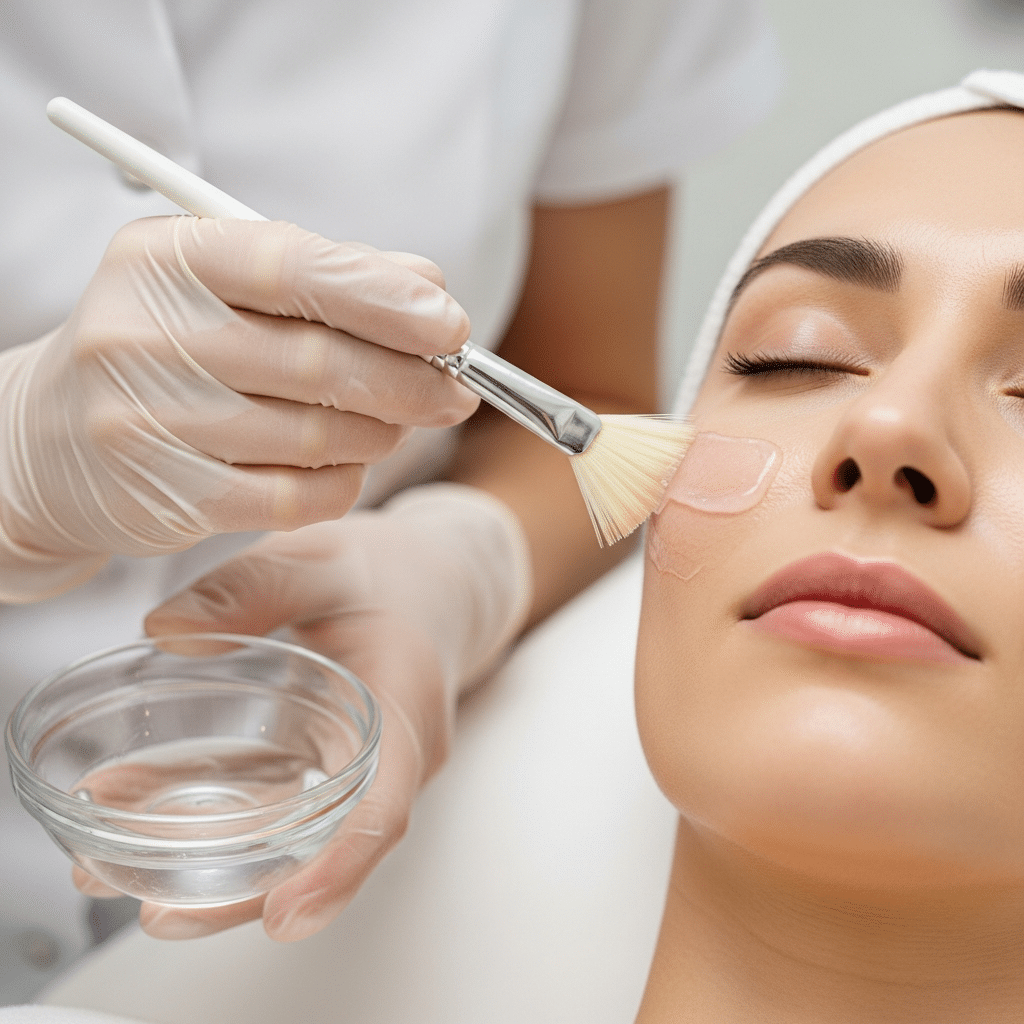
A Chemical peel (chemical peel) is a dermatological and cosmetic procedure in which one or more chemical substances – usually acids – are applied to the skin to bring about the controlled removal (exfoliation) of the upper layers of the skin.
This process stimulates the skin to regenerate and produce new collagen. The result is a smoother, more even and fresher complexion.
The 3 depths: shallow, medium and deep
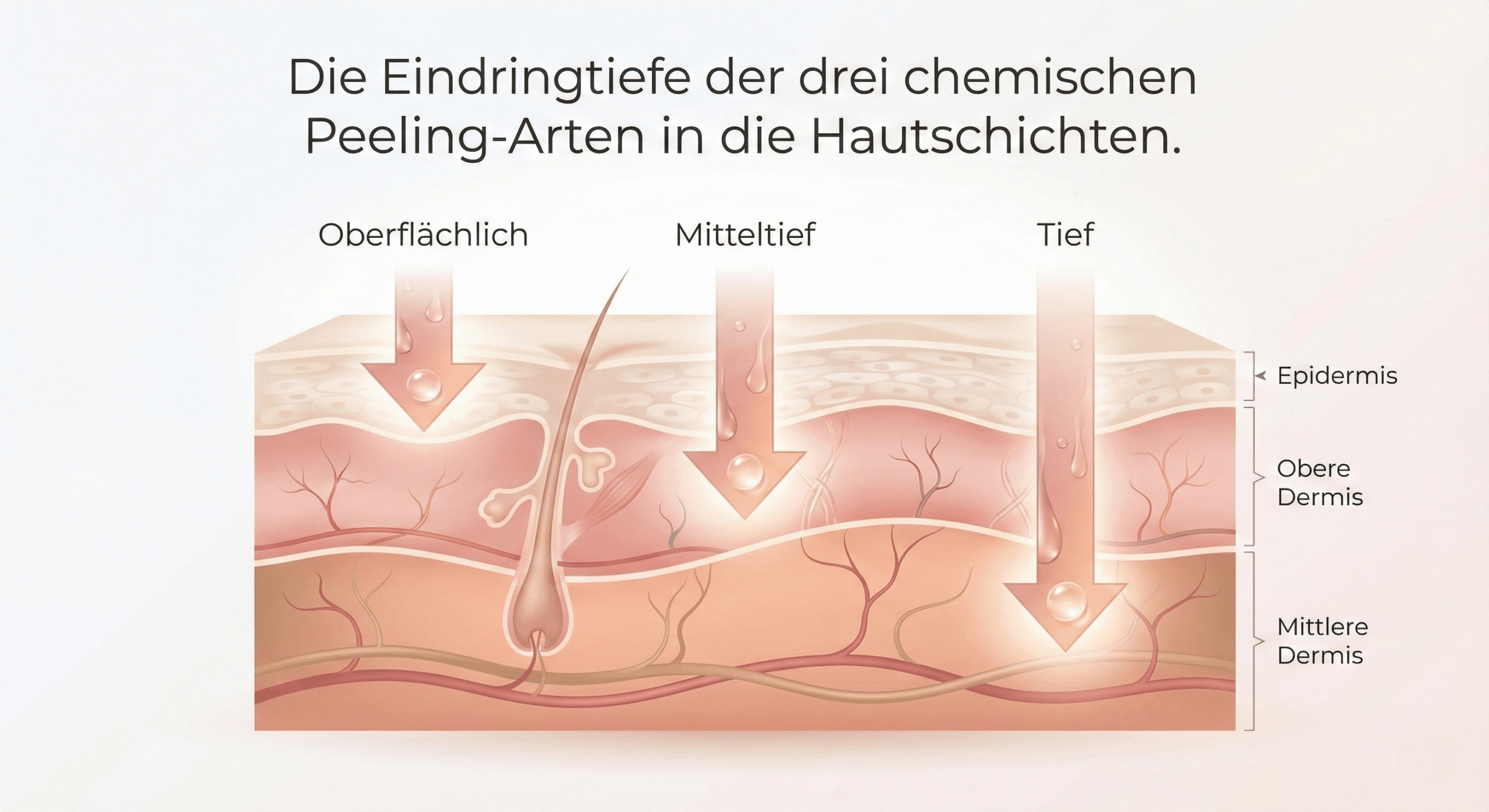
The most important distinction when it comes to chemical peels is their depth of penetration, as this determines not only the intensity of the results but also the duration of the recovery period and the risk profile.
1. The superficial peel (Light Peel): A quick way to get that glow
This peel acts exclusively on the outermost layer of the skin (the epidermis) and is often referred to as a „lunchtime peel“.
Substances:
Mainly Fruit acids (AHAs) such as glycolic acid in low concentrations, or Salicylic acid (BHA).
Ideal for:
Mild acne, blocked pores, a dull complexion, and to refresh the skin in general.
Process & Feel:
A slight tingling or burning sensation during the short application time is normal.
Downtime:
Minimal to none. Mild redness usually subsides within a few hours. The skin may flake slightly after a few days.
Risk:
Very low when used professionally.
Comparison table: Which exfoliator is right for whom?
| Characteristic | Superficial | Medium-low | Low |
|---|---|---|---|
| Substance | AHA, BHA | TCA | Phenol, highly concentrated TCA |
| Penetration depth | epidermis | Upper dermis | Middle dermis |
| Indications | Dull complexion, mild acne | Wrinkles, scars, pigmentation. | Deep wrinkles, severe damage |
| Downtime | None to 1 day | 7–10 days | 2–3 months |
| Risk level | Very low | Medium | High |
| Users | Doctor, alternative practitioner, beautician | Doctors only! | Only experienced specialists! |
Procedure, aftercare and why professional execution is crucial
Safety first: only with the professionals!
A chemical peel is not merely a cosmetic pampering treatment, but a targeted intervention in the skin barrier. Choosing the right acid, the appropriate concentration and the precise application time requires in-depth medical and chemical knowledge. Incorrect application can lead to chemical burns, permanent scarring and pigmentation disorders. Medium-depth and deep chemical peels should, without exception, be carried out by an experienced dermatologist!
Aftercare is crucial:
Important aftercare measures
- Sun protection: After every exfoliation, the skin is extremely sensitive to light. Daily, consistent use of sun protection with SPF 50+ is absolutely essential for several weeks or even months in order to prevent pigmentation spots and skin damage.
- Care: Use only mild, soothing skincare products recommended by your practitioner.
- Do not tamper with: Never pull or pick at the flaking patches of skin, to prevent scarring.
Risks and contraindications
In addition to the risks already mentioned, such as scarring, Infections and there are clear contraindications in the case of pigment changes:
- Active herpes infection
- Taking certain medicines (e.g. isotretinoin)
- Acute inflammatory skin conditions in the treatment area
- Predisposition to keloid scarring
- Pregnancy and breastfeeding
- Fitzpatrick skin type IV and above (increased risk of pigmentation disorders)
Frequently Asked Questions (FAQ) about chemical peels
The sensation ranges from a slight tingling (superficial) to an intense burning sensation (medium-depth), which, however, only lasts for the duration of the treatment. Deep peels require a Anaesthesia.
Superficial peels are often recommended as a course of treatment comprising 4–6 sessions. Medium-depth peels are usually carried out just once or repeated at intervals of 1–2 years.
The cost varies considerably depending on the type of peel and the practitioner. Superficial peels start at around €80–150 per session. Medium-depth TCA peels cost between €400 and €1,000, whilst deep phenol peels cost several thousand euros.
No. Products for home use are restricted by law to very low concentrations and cannot be compared with professional peels. Medically effective peels may only be carried out by qualified professionals. Attempting to use highly concentrated acids yourself is extremely dangerous and can lead to severe chemical burns.
For superficial peels, immediately or after a few days. For medium-depth peels, once healing is complete (after approximately 2–4 weeks), although the results will continue to improve over the following months as new collagen forms. For deep peels, the final result cannot be assessed until 6–12 months have passed.