Drainage after an operation: Why the tube in the wound helps you heal
A drain is a thin tube that extends from the surgical site following major operations and aids healing as part of post-operative care.
Table of Contents
Important note
This article is for information purposes only and is not a substitute for a medical diagnosis or advice. If you are unsure, or if you require a personalised treatment plan, it is essential that you consult a qualified specialist.
People who wake up after major surgery, such as a tummy tuck or breast augmentation, are sometimes concerned about a thin tube leading out of the area that has been operated on. However, this tube, known as a drain, is nothing to worry about. On the contrary: it plays a vital role in ensuring thorough post-operative care.
This glossary entry explains, in a clear and precise manner, what post-operative drainage is, why it is so important for a speedy recovery with few complications, and what you need to bear in mind when using it.
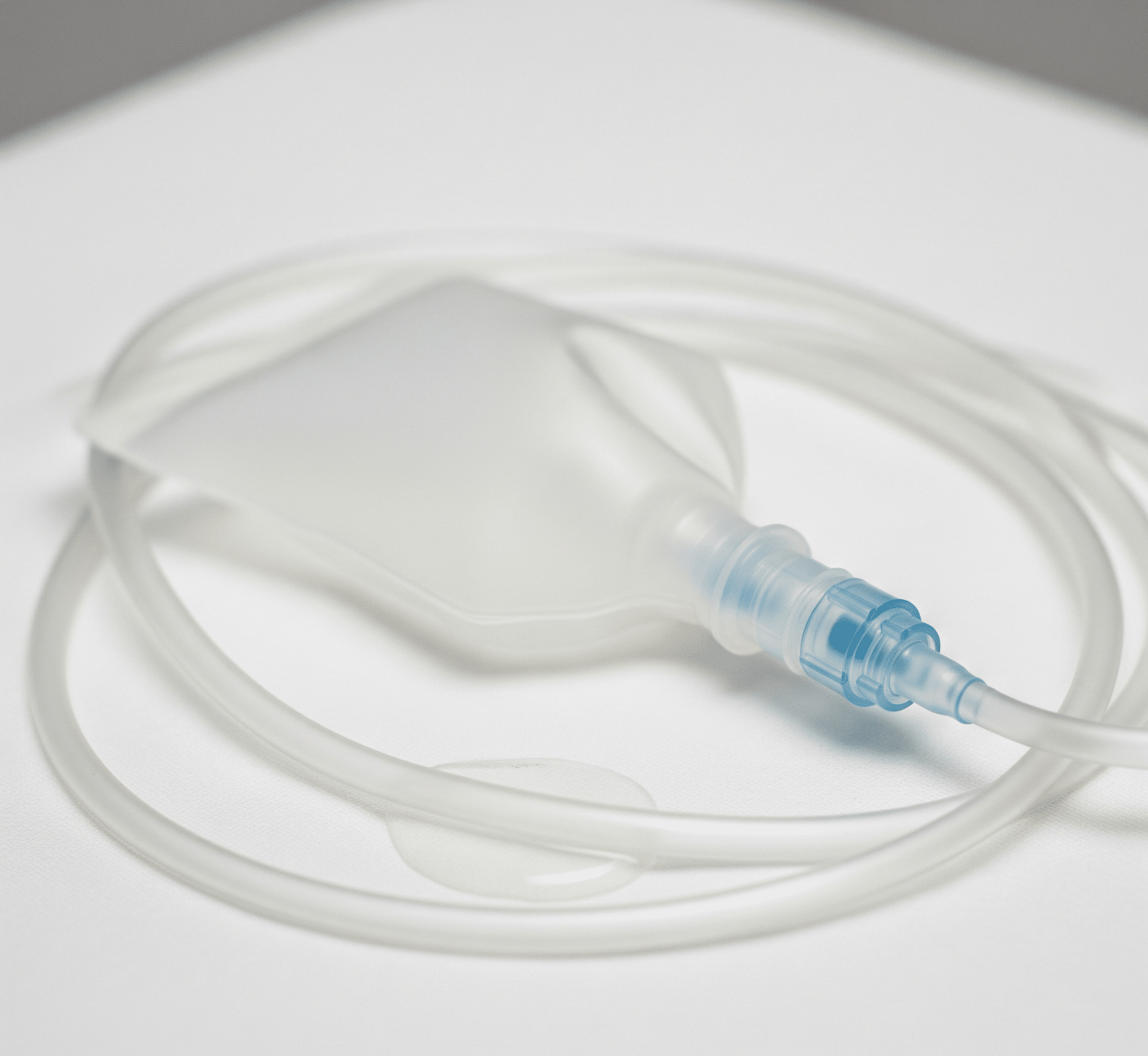
What is a post-operative drain?
A post-operative or wound drain is a medical device, usually a thin, flexible plastic tube, which is inserted into a wound cavity or a joint during an operation.
Its purpose is to drain fluids produced after the procedure – such as wound exudate, blood and lymph – from the body. This aids wound healing and helps prevent complications.
Why is drainage so important after surgery?
Imagine that, during a tummy tuck, the skin is lifted to tighten the tissue underneath. This inevitably creates a cavity. The body reacts to this procedure quite naturally by producing wound fluid.
Without drainage, this fluid can accumulate in the wound cavity. This can lead to a number of problems:
- Serum formation: A build-up of wound fluid (seroma) may form, which can be painful, cause a feeling of tightness and make the skin bulge unsightly. It may be necessary to drain the seroma at a later stage.
- Risk of infection: Accumulated fluid is an ideal breeding ground for bacteria and increases the risk of wound infection.
- Poor wound healing: The pressure exerted by the fluid prevents the layers of tissue from adhering properly to one another and fusing together.
Drainage is therefore your friend, not your enemy: it safely drains away this excess fluid, reduces pressure in the tissue and thus creates the ideal conditions for rapid, clean and uninterrupted healing.
The Redon drain: the gold standard in plastic surgery
The most commonly used form in plastic surgery is the so-called Redon drainage.
This is a suction drainage system (active drainage). The collection container (a small plastic bottle) is positioned beneath a slight, artificially created Negative pressure (vacuum). This suction actively draws the exudate out of the wound whilst ensuring that the loosened layers of tissue can adhere closely to one another again within the body and heal together quickly.
The patient experience: What to expect
- What does that look like? You will see one or more thin tubes emerging from the skin through a small opening next to the actual surgical scar. At the end of the tube there is usually – depending on the drainage system – either a small, compressed plastic bottle (e.g. a Redon bottle), which creates a gentle suction, or a small bag.
- How long will the drain remain in place? This is entirely up to your doctor. As a rule, a drain is left in place until only a small amount of fluid is being drained each day. Depending on the type and extent of the operation, this can take anywhere from one day to several days.
- Does it hurt when the drain is removed? This is one of the most common concerns. The procedure is usually straightforward and takes only a few seconds. Most patients experience a brief, tugging or uncomfortable sensation, but no severe pain. Taking a deep breath helps a great deal.
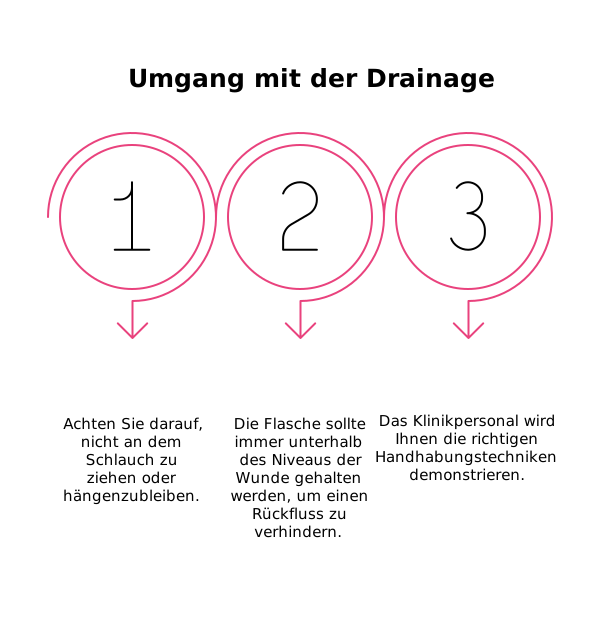
Risks and the importance of insurance cover
Although drains significantly reduce the risk of complications, problems can still arise. A seroma may still form even after the drain has been removed, necessitating a puncture or other follow-up treatment. Such follow-up treatments following a purely cosmetic procedure are often not covered by statutory or private health insurance.
Watch out for red flags!
Contact your doctor immediately if:
- suddenly, very large amounts of blood (bright red) start to collect in the bottle.
- the point where the tube exits the skin is severely reddened, throbbing, feels hot to the touch or is discharging pus (signs of an infection).
- the vacuum in the bottle suddenly disappears, even though a lot of liquid has still been dispensed.
- the area around the wound becomes extremely swollen and hard (this could mean that the drain is blocked and a seroma or haematoma is forming).
To protect yourself against these unforeseen costs, follow-up costs insurance is an important form of cover. It offers financial security should medically necessary treatment be required following your cosmetic surgery due to complications. Find out more now!
Frequently Asked Questions (FAQ) on drainage
Drains are mainly used in procedures that result in larger wound areas, such as Tummy tuck, Breast augmentation/-reduction or a facelift.
A drainage tube removes fluid from a wound. A catheter is usually used to drain bodily fluids from hollow organs (e.g. a urinary catheter to drain urine).
That depends on the operation and the hospital. For some procedures, patients may be discharged home whilst still having a drain in place and return to the surgery or hospital to have it removed.
Contact your doctor immediately if you:
- notice severe pain, redness or swelling around the exit site,
- Having a fever or
- the bottle suddenly fills rapidly with bright red blood.