Stages of scar healing
Scar healing goes through several stages after an operation – it takes months for the fresh wound to develop into a fine, pale line.
Table of Contents
Important note
This article is for information purposes only and is not a substitute for a medical diagnosis or advice. If you are unsure, or if you require a personalised treatment plan, it is essential that you consult a qualified specialist.
What is scar healing?
Following cosmetic surgery, the shape is often visible quite quickly, but the final result is only determined months later: by the scar. The journey from a fresh surgical wound to a fine, pale line is a complex process, strictly orchestrated by the body.
Anyone who wants to Stages of scar healing (the stages of wound healing) will not panic if they experience itching or slight swelling – and, above all, will know that, when he what what you can do to look after your scar in the best possible way. In this guide, we translate the medical timeline into practical advice for your aftercare.
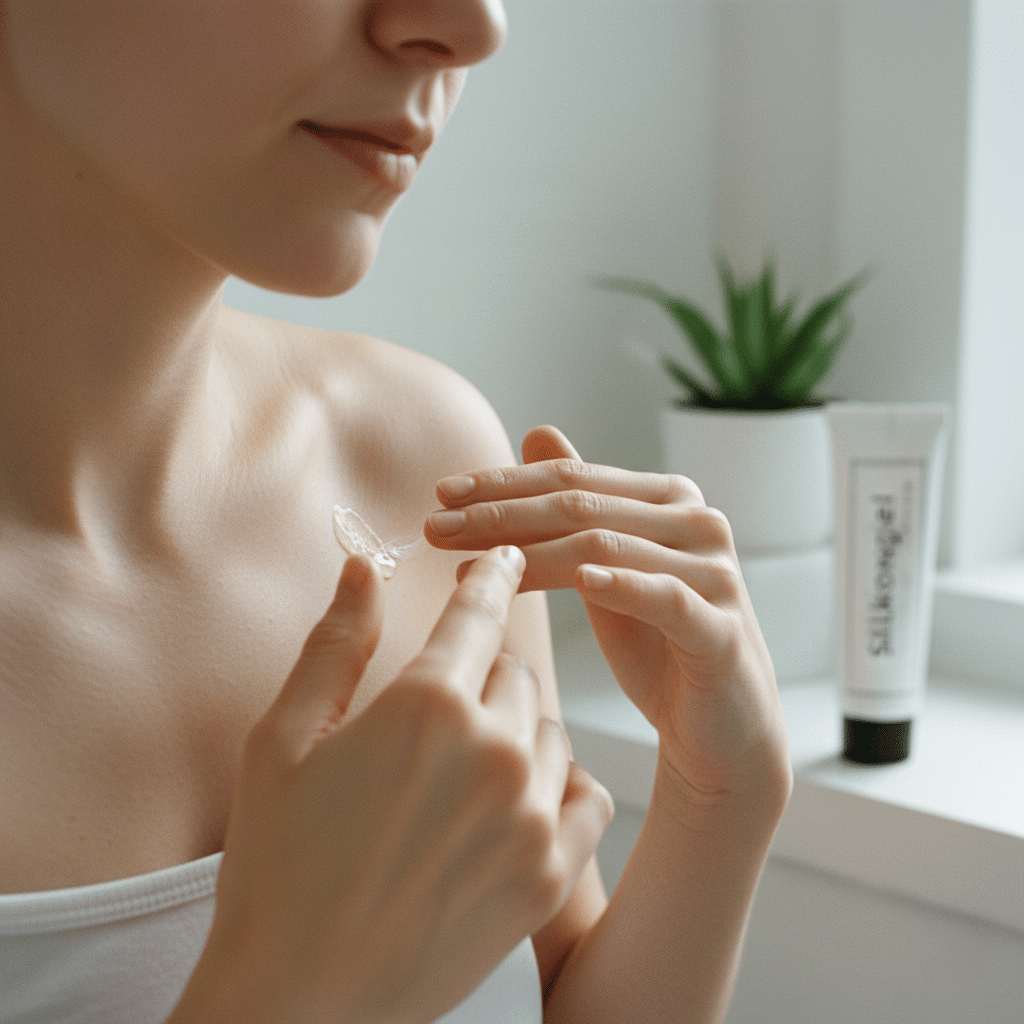
Scar formation is the final stage of wound healing. If an injury or surgical incision extends into the deeper dermis, the body cannot regenerate this tissue exactly as it was.
It repairs the defect using inferior replacement tissue: scar tissue. This tissue contains no hair follicles, sweat glands or sebaceous glands, and fewer elastic fibres. The process by which this replacement tissue is formed and structured takes place in four phases that flow seamlessly into one another.
Phase 1: The exudation phase (cleansing phase)
- When: Day 1 to approximately Day 4 after the operation.
- What happens: The body stops the bleeding (blood clotting) and flushes germs and cellular debris out of the wound. A moist wound secretion (exudate) forms. Phagocytes (macrophages) clear up the debris. The wound becomes slightly red, swells and throbs – classic signs of inflammation, which in this case are a normal indication that the immune system is at work.
- The feeling: Throbbing, mild pain, swelling.
Dos and Don’ts in Phase 1:
- TH: Complete rest and aftercare! Take care of the operated area and keep it elevated.
- TH: Apply a cold compress (as advised by your doctor, to reduce swelling).
- DON’T: Never change or touch the sterile wound dressing yourself! Do not shower without waterproof plasters.
Phase 2: The granulation phase (development phase)
- When: From around day 4 to day 14.
- What happens: The actual healing process begins. Cells known as fibroblasts produce new connective tissue (collagen), which fills the wound gap from the edges inwards. New, fine blood vessels sprout to supply the fresh tissue (granulation tissue) with oxygen. It is bright red and very sensitive.
- The feeling: The wound may itch (a sign of healing) and feel tight.
Dos and Don’ts in Phase 2:
- TH: Make sure you drink enough fluids and eat a protein-rich diet to provide your body with the building blocks for new tissue.
- DON’T: Scratching! Even if it itches, you mustn’t scratch off the scab that forms.
- DON’T: Still no scar creams or apply massage. The wound has not yet fully healed.
Phase 3: The epithelialisation and repair phase
- When: Around week 2 to week 4.
- What happens: New skin cells (epithelial cells) migrate from the edge of the wound across the fresh granulation tissue and finally seal the wound at the surface. The scab falls off by itself. The new scar is often still thick, raised, very red and sensitive. The wild, unstructured collagen provides stability.
- The feeling: The scar is sensitive to changes in the weather; it feels very tight when moving.
Dos and Don’ts in Phase 3:
- TH: Start of the active scar care! Once the scab has completely fallen off, special scar gels (often silicone-based) or moisturising ointments can be applied.
- TH: Gently and carefully massage the scar (following the doctor’s instructions) to break up adhesions in the tissue.
- DON’T: Avoid pulling or stretching. Exercise is usually still off-limits to prevent the fresh suture from coming apart.
Phase 4: The remodelling phase (maturation phase)
- When: From week 4 up to 2 years after the operation.
- What happens: The thick, disorganised collagen of phase 3 is gradually replaced by more stable, parallel-aligned collagen. Blood flow to the scar decreases, causing its deep red colour to gradually fade to a pale pink and eventually to a silvery-white. The scar becomes softer and flatter.
- The feeling: The scar is becoming increasingly integrated into the surrounding tissue, and the feeling of tightness is disappearing.
Dos and Don’ts in Phase 4:
- TH: More consistently, daily sun protection (SPF 50+) Apply to the scar for at least 12 months! New scar tissue does not provide any UV protection of its own. Without sun cream, there is a risk of permanent darkening or. Pigment disorder (Hyperpigmentation).
- TH: If you have raised scars, make sure you wear silicone plasters at all times.
Wound-healing disorders and financial security
Even if all guidelines are followed to the letter, the healing process can still go awry. An infection during phase 1 or excessive collagen production (hypertrophic scars or keloids) in the later phases can jeopardise the aesthetic outcome. In such cases, surgical scar correction may be necessary.
As statutory and private health insurance schemes do not usually cover the costs of treating complications arising from cosmetic surgery – or do not cover them in full – this creates a financial risk. A Consequential Costs Insurance can protect you against this and cover the costs of medically necessary follow-up treatment for wound-healing complications. Alternatively, you can also Finance a treatment.
Frequently Asked Questions (FAQ) on Scar Healing
The healing process of a scar (the remodelling phase) takes a very long time. It is only after about 12 to 18 months – and sometimes even after two years – that a scar takes on its final, pale and soft appearance.
Itching, particularly during the granulation and early repair phases (from week 2 onwards), is often a sign that nerve fibres are growing and new tissue is forming. It is usually a good sign that healing is actively taking place. However, scratching is strictly forbidden.
Scar massage should not be started until the wound is 100% closed, dry and free of scabs. This is usually the case around 3 weeks after the operation. Always check the exact timing with your surgeon.
Yes, very good. Medical-grade silicone plasters or silicone gels form a protective film that preserves the skin’s moisture (hydration). This signals the fibroblasts to reduce collagen production, which effectively prevents the formation of thick, raised scars (hypertrophy).