Scar care after surgery: What really helps and what you should avoid
A scar often determines how visible a surgical procedure was. Silicone gel, massage and UV protection are considered the most effective measures – but what really matters?

Scar care after surgery:
Scar care following surgery begins as soon as the wound has fully healed, typically 2–3 weeks after the procedure. Silicone gel, regular scar massage and consistent UV protection with SPF 50+ are considered the most effective measures for permanently improving the appearance of a scar.
Table of Contents
Important note
This article is for information purposes only and is not a substitute for a medical diagnosis or advice. If you are unsure, or if you require a personalised treatment plan, it is essential that you consult a qualified specialist.
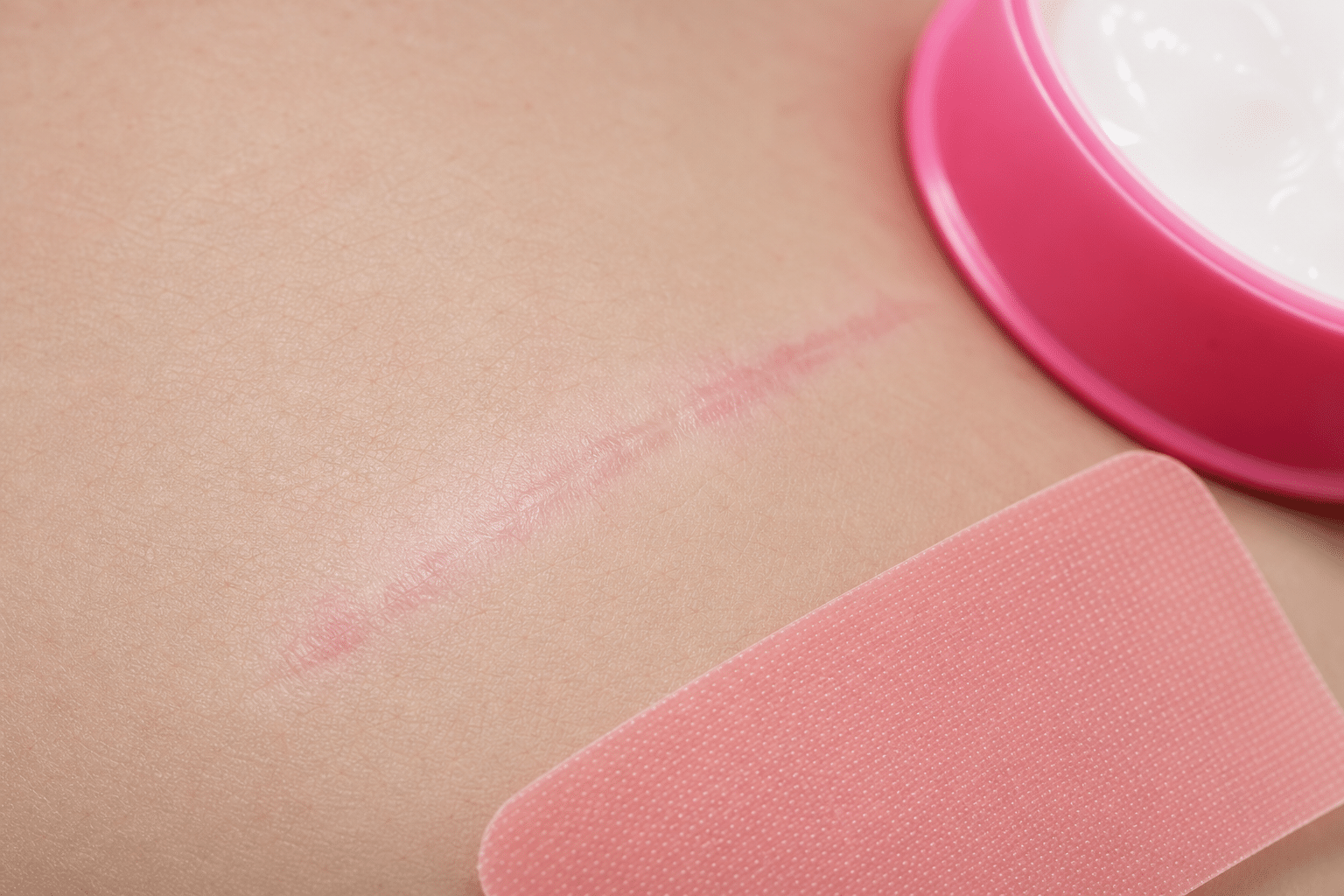
Scar care following an operation is not an optional step; it plays a decisive role in determining how inconspicuous a scar will ultimately be. Following a surgical procedure, scar tissue inevitably forms as a result of the tissue injury. Starting scar care early and consistently gives the body the support it needs to keep the scar soft, flat and as inconspicuous as possible.
This guide explains how the wound heals after surgery, which care methods are actually effective, and which warning signs you should take seriously.
The 3 stages of wound healing after surgery
- Phase 1, Cleansing (Days 1–4): Haemostasis, inflammatory response, wound closure
- Phase 2, Regeneration (Weeks 1–3): Fibroblasts form granulation tissue; collagen is deposited
- Phase 3, Remodelling (months 1–24): The scar matures, softens and gradually fades
Scarring following surgery is a natural protective response by the body. If a wound, such as a surgical incision, extends into the deeper layers of the skin, the skin cannot regenerate fully. Instead, replacement connective tissue forms: the scar.
The three stages of wound healing following surgery, from inflammation through cell regeneration to scar maturation, a process that can take up to two years.
In the first phase, the cleansing phase, blood flushes bacteria and cellular debris out of the wound. Blood clotting then begins, and a scab forms. During the regeneration phase, starting around week 1, specialised cells known as fibroblasts stimulate collagen production. Collagen is the structural protein that provides strength to the developing scar tissue.
The third phase, remodelling, can take up to two years, depending on the extent of the procedure and the individual’s constitution. It is only during this phase that the scar tissue becomes softer, flatter and visibly fades. This is precisely where targeted scar care comes into play: it supports the remodelling process and improves the aesthetic outcome.
When can you start looking after your scar?
Scar care should only begin once the wound has completely healed, with no open scabs or stitches remaining. For most procedures, this is usually 2–3 weeks after the operation. Following an abdominoplasty or tummy tuck, this may be slightly later depending on the size of the incision. Your treating doctor will give the go-ahead on a case-by-case basis.
Patience during the first few weeks pays off.
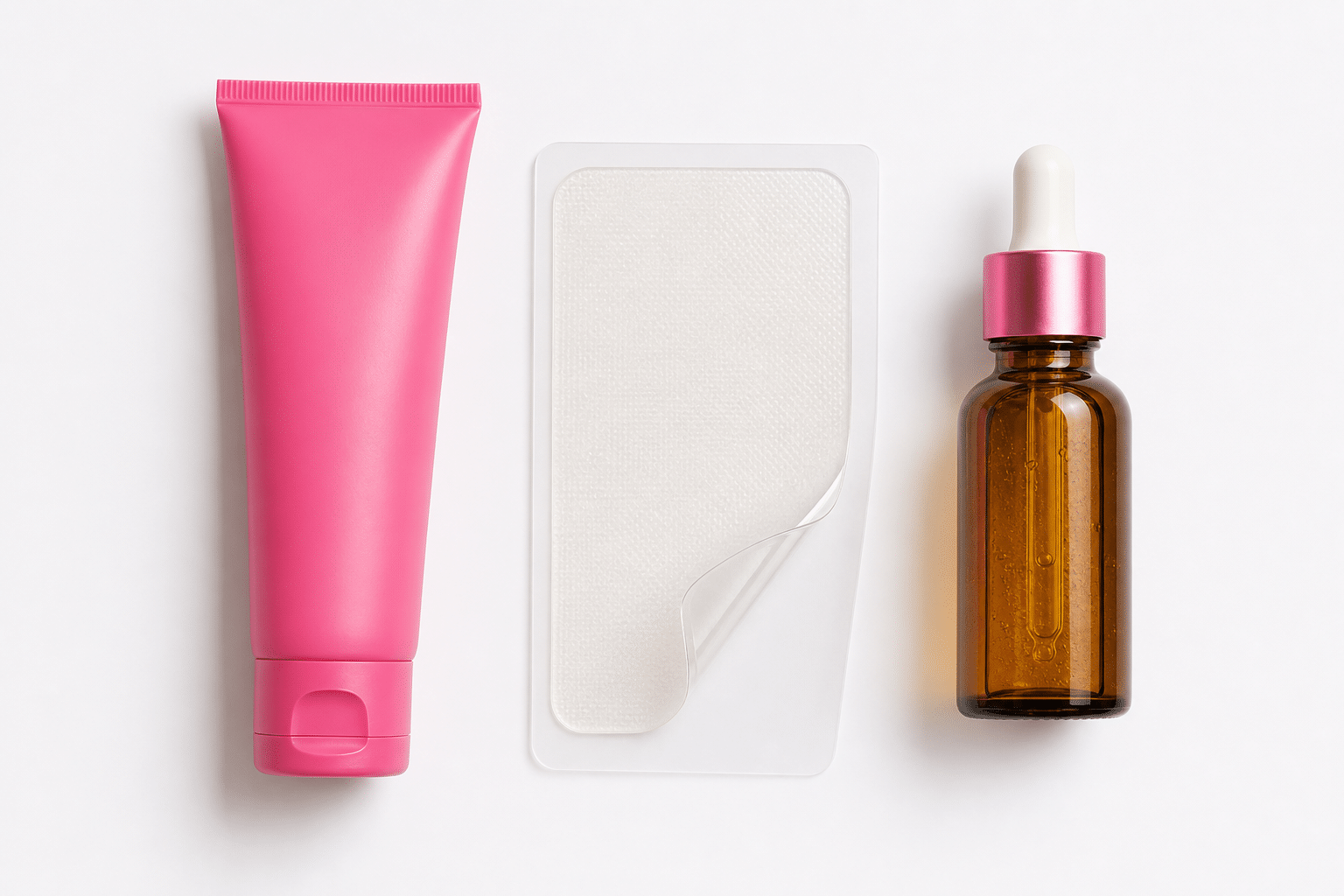
Proper scar care after surgery: the most effective methods
- Silicone gel or silicone plasters: apply twice a day and use consistently for at least 2–3 months
- Scar massage: circular movements with light pressure, 3–5 minutes a day, once the wound has completely healed
- UV protection: SPF 50+ for at least 12 months following the procedure, even on cloudy days
- Keeping the area moist: Apply wound care ointments such as Bepanthen during the first few weeks immediately after the stitches have been removed
The Scar care after surgery is based on a few, well-established principles. It is less about a single ‘miracle’ remedy than about the combination of treatments and their consistent use over a period of months.
- Phase 1: Weeks 1–3 after the operation (wound still closed)
- Keep the wound dry and clean: Do not wash or apply cream whilst the wound has not yet fully healed.
- Change the wound dressing regularly: Follow medical instructions; use sterile dressings and avoid the spread of infection.
- Avoid the sun at all costs: Never expose fresh wounds to UV radiation; cover them with clothing or plasters.
- Be on the lookout for warning signs: If you experience increasing redness, warmth, swelling or pus: seek medical attention immediately.
- Phase 2: Months 1–3 (wound closed, aftercare begins)
- Apply silicone gel twice a day: Apply a thin layer to the fully healed scar and, once dry, leave it on for at least 12 weeks.
- Alternative uses for silicone plasters: Particularly suitable for use at night. 12–24 hours a day for optimum results.
- Perform scar massage daily: 2–5 minutes of gentle circular movements with light pressure helps to promote collagen renewal and softness.
- Apply SPF 50+ sun cream: Prevents permanent hyperpigmentation of the fresh scar whenever it is exposed to the sun.
- Phase 3: Months 3–12 (scar maturation)
- Continue applying the silicone gel: A total duration of up to 6 months is recommended for hypertrophic scars.
- Keep the scar moist: Massaging in nourishing oils (e.g. jojoba or rosehip oil) helps to keep the scar tissue supple.
- Attend a medical check-up: Have the scar assessed and, if there is excessive scar tissue, seek professional treatment.
- Continue to use sun protection every day: For at least 12 months after the operation, even on cloudy days.
Immediately after the stitches are removed, surgeons often recommend simple panthenol-based wound care ointments to keep the skin supple and support the healing process. Once the surface has stabilised, the treatment is switched to silicone-based products, which represent the current gold standard in scar treatment.
Silicone gel, scar cream or plasters: which is most effective?
According to the guidelines of the German Dermatological Society (DDG), silicone-based products are supported by the strongest evidence for conservative scar treatment, particularly in the case of hypertrophic scars. Silicone gel forms a protective film over the scar, regulates moisture balance and curbs excessive collagen production.
| Product type | Mode of action | Suitable for | Application |
|---|---|---|---|
| Silicone gel (e.g. Kelo-Cote) | Hydration, collagen inhibition | All types of scars, particularly hypertrophic scars | Twice a day, for 60–90 days |
| Silicone plasters / scar plasters | Occlusive, pressure effect | Extensive scarring, torso, legs | 12–24 hours a day, for at least 8 weeks |
| Scar cream (e.g. Bepanthen Scars) | Moisture retention, promotion of blood circulation | Fresh, superficial scars | Massage in 2–3 times a day |
Silicone plasters are particularly suitable for flat scars, such as those resulting from liposuction on the abdomen. They can be worn for 12–24 hours a day and exert a gentle compressive effect, which helps to soften the scar tissue. The patch does not replace the gel but complements it; depending on the location of the scar and their daily routine, those affected can choose the more practical option.
How to perform scar massage correctly
Scar massage, also known as scar pressure massage, is one of the most effective yet most frequently neglected treatments. To do this, massage the scar with two fingers using small circular movements and moderate pressure. The aim is to break up adhesions in the tissue and make the scar tissue more supple.
In practical terms, this means: 3–5 minutes a day, preferably after a shower, when the warmth has improved blood circulation to the skin. Do not start until the doctor has confirmed that the wound has completely healed.
Important points to bear in mind when giving a massage
Stop immediately if the massage causes pain, warmth or redness that goes beyond the normal sensation of pressure. These signs may indicate inflammation and should be investigated by a doctor.
A diet to promote wound healing
Certain nutrients are essential for the formation of scar tissue; if they are lacking, the healing process slows down measurably.
- Vitamin C: Essential for collagen synthesis. Daily requirement: at least 75–100 mg; increased requirement following surgery.
- Zinc: Promotes cell division and wound healing. Found in pulses, meat and nuts.
- Protein: Building blocks for new tissue. A daily intake of 1.2–1.5 g per kilogram of body weight is recommended following major surgery.
Alcohol suppresses the immune system and can promote inflammatory reactions.
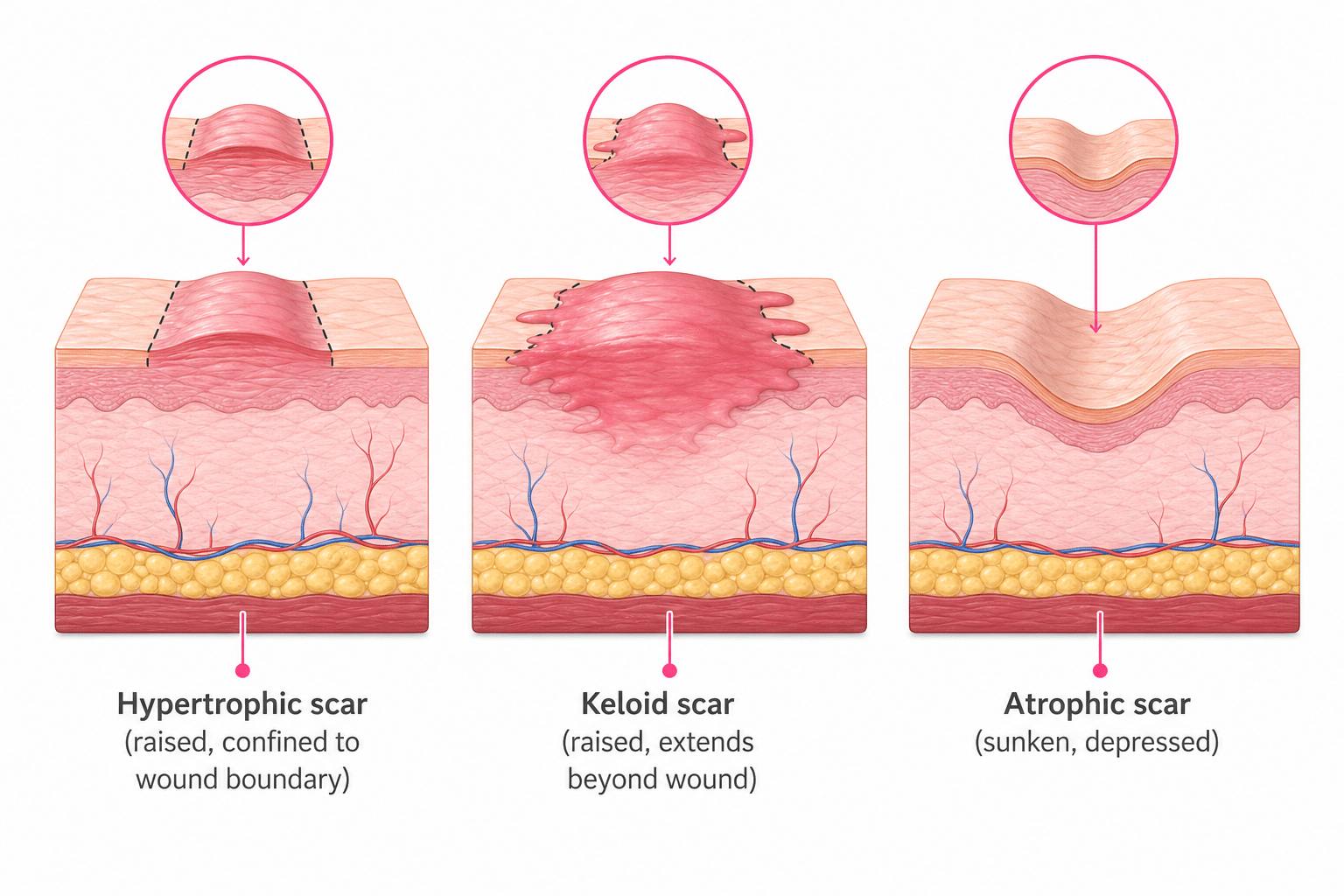
Identifying types of scars: hypertrophic scars, keloids and atrophic scars
- Hypertrophic scar: raised, remains within the original wound borders, responds well to silicone gel
- Keloid scar: extends beyond the edges of the wound; genetic predisposition; often requires cortisone injections or cryotherapy
- Atrophic scar: sunken, often resulting from acne or superficial wounds; professional treatment (e.g. laser) is advisable
Hypertrophic scars These occur when the body produces too much collagen. The scar protrudes above the skin’s surface but remains within the original wound boundaries. Silicone-based products help to regulate collagen production and smooth out the scar. Significant improvements are possible with consistent use over 2–3 months.
The Keloid It differs from a hypertrophic scar in that it grows beyond the edges of the wound. Keloids are more common in people with darker skin tones and a corresponding genetic predisposition. Conservative scar management alone is often insufficient in such cases. Cortisone injections, cryotherapy or laser treatment can reduce the appearance of keloids; such procedures should be regarded as follow-up measures that may be necessary after cosmetic surgery.
Atrophic scars are located below the skin’s surface. They occur when the tissue has not produced enough collagen during the healing process. Professional treatments such as micro-needling or fractional laser are more effective here than surface-level skincare alone.
If complications arise following cosmetic surgery – such as impaired wound healing, a hypertrophic scar or a keloid – the costs of follow-up treatment can be considerable. Statutory health insurance often does not cover such follow-up treatment after cosmetic procedures, or only covers part of the costs. Follow-up cost insurance from 4beauty covers you precisely for these situations – transparently, with a free choice of doctor and cover of up to 300,000 euros.
Frequently asked questions about scar care after surgery
Active scar care should be carried out consistently for at least 3–6 months following the procedure. Depending on the procedure and the type of scar, the full healing process can take up to 24 months. Experience shows that for major operations such as an abdominoplasty or tummy tuck, a longer period of aftercare is required than for minor procedures.
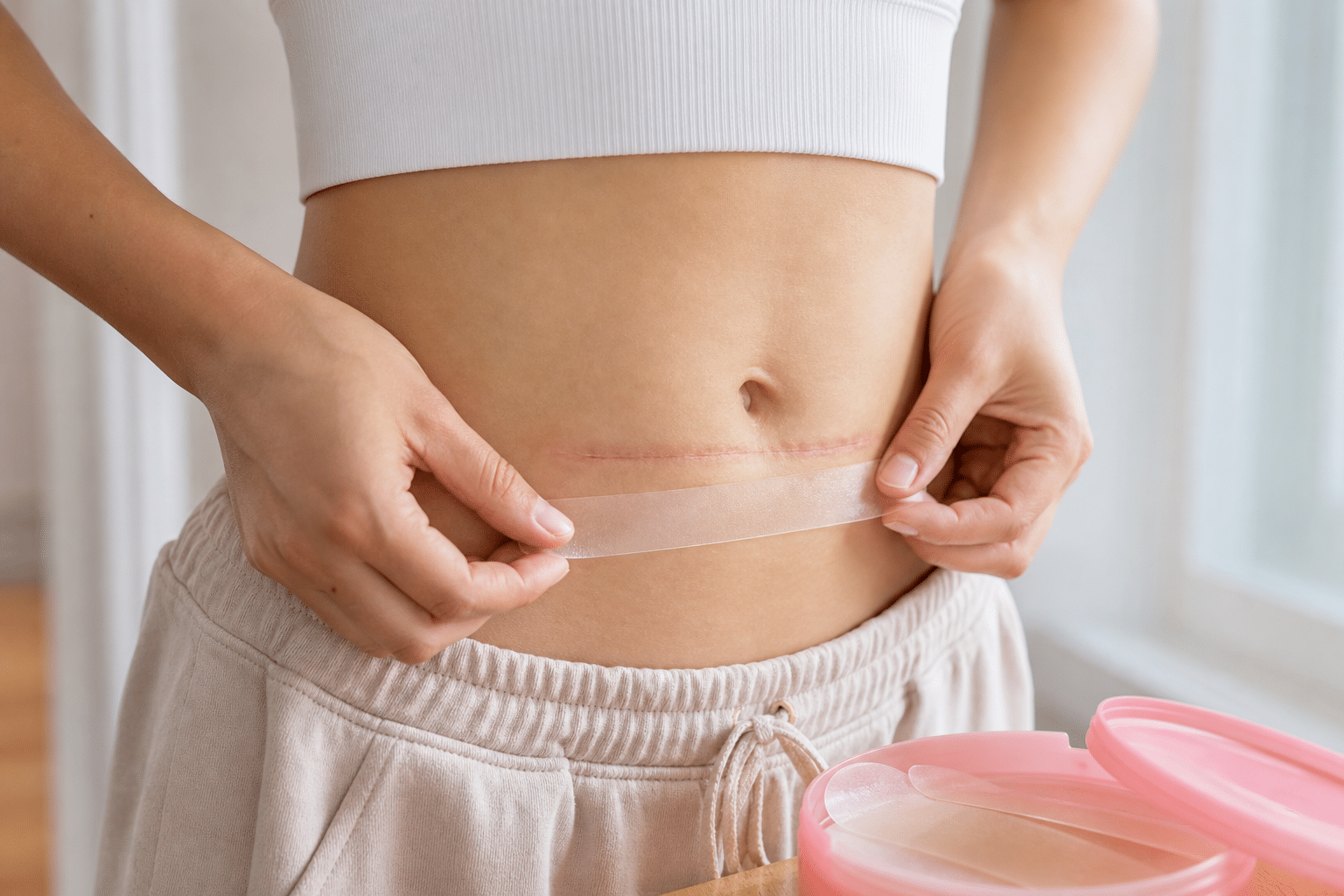
No. Scars that extend into the deeper layers of the skin do not disappear completely. However, with consistent scar care, their appearance can be significantly improved: the scar becomes softer, flatter and visibly fades. It is important to have realistic expectations; the aim is a scar that is as inconspicuous and well-integrated as possible, not skin that appears completely scar-free.
Consult a doctor if, after the fourth week, the scarred area is still red, warm to the touch or painful, if there is any discharge, or if the scar is visibly growing into the surrounding tissue. These signs may indicate a wound-healing disorder, an infection or pathological scarring – conditions which require medical treatment and may lead to costly follow-up procedures. Further information on frequently asked questions regarding cover can be found in our FAQs.
Yes, without exception. UV radiation can cause permanent hyperpigmentation in fresh scar tissue: the scar becomes darker and more noticeable rather than lighter. For at least 12 months after the procedure – that is, throughout an entire summer season – you should protect fresh scars with sun cream with SPF 50+, even on cloudy days. This is particularly important for scars on the face.
Silicone gel should be applied twice a day, in the morning and in the evening, after cleansing the skin. For the gel to be effective, it must be allowed to dry completely after application (approx. 1–2 minutes). You can then apply sun cream or make-up over it. The minimum course of treatment is 60–90 days; for hypertrophic scars, dermatologists often recommend 3–6 months.
You might also be interested in this
-

Preparation & Aftercare
Aftercare following cosmetic surgery: What really matters for healing and results after the procedure
Surgery is only the first step – aftercare determines the final outcome. Here’s what you absolutely must do correctly in the first few weeks.
-

Treatments
Tummy Tuck: Everything You Need to Know at a Glance
A toned tummy, a new-found confidence – but which method is right for you, what does the recovery process involve, and what costs can you expect? All the key answers at a glance.
-

Treatments
Risks and complications of a breast removal (mastectomy)
For many women, having a breast removed is one of the most life-changing decisions they will ever make. What are the medical risks and consequences of a mastectomy?
-
Treatments
Bullhorn Lift: Everything patients need to know about the Bullhorn Lift at a glance
Full lips without any fillers: the Bullhorn Lift permanently lifts the upper lip and reveals more of your teeth. Everything you need to know about the procedure, aftercare, costs and risks.
-
Risks & Complications
Upper Arm Lift Risks and Complications: The Honest and Comprehensive Guide to Making a Safe Decision
Toned upper arms and greater confidence when wearing sleeveless clothes – but an upper arm lift is not a risk-free procedure. What complications should you be aware of beforehand?
-

Risks & Complications
Buttock Augmentation: Risks and Complications – Your Comprehensive Guide to Making an Informed Decision
Many people dream of having a shapely bottom – but bottom augmentation is also a matter of safety. What risks and complications should you be aware of beforehand?